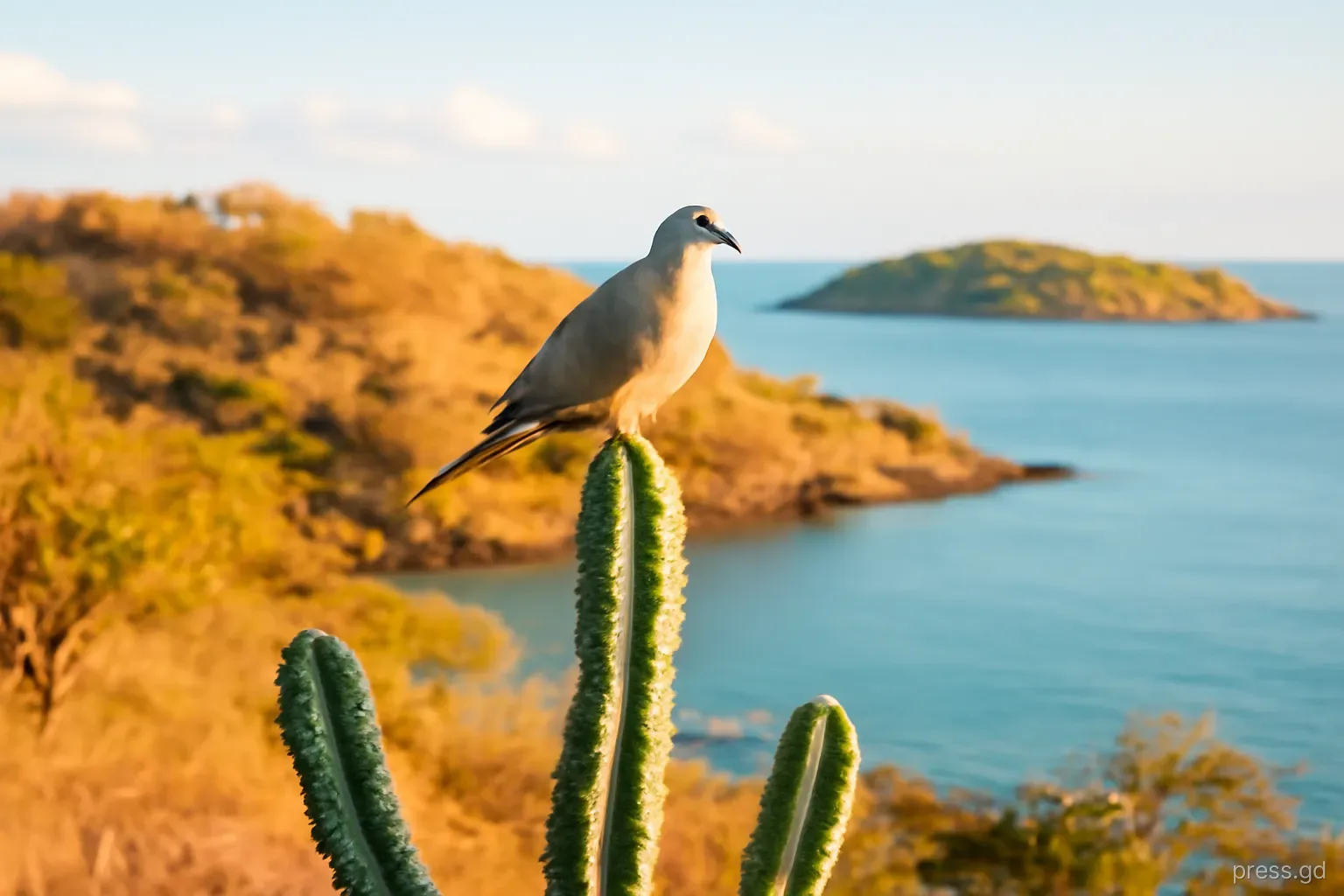
Few environmental disputes in Grenada attracted as much international attention as the plan, in the late 2000s, to build a luxury resort at Mount Hartman in the south-west of the island. The site included part of a national park created to protect the Grenada dove, the national bird and one of the most endangered birds in the world, confined to patches of dry forest in the south-west and on the west coast.
The case involved a government keen on investment, a developer under international scrutiny, local and foreign conservation groups, and a legal change that allowed protected land to be exchanged. The project was eventually abandoned, but the questions it raised about how a small state balances development and conservation keep returning with every large coastal proposal. This explainer revisits what happened and what it shows.
Why Mount Hartman mattered
The Grenada dove lives in dry, scrubby lowland forest, a habitat that has been heavily cleared for housing, roads and tourism along the south and west coasts. Population estimates have long put it in the low hundreds or fewer, and Hurricane Ivan in 2004 damaged much of the remaining habitat. BirdLife International and the IUCN list the species as critically endangered.
Mount Hartman, near the bays and peninsulas of the south coast, held one of the most important concentrations of the dove. A national park had been declared there in the 1990s specifically to protect it. By the mid-2000s, accounts from conservation groups suggested that more than half of the remaining doves were found in the park and adjoining unprotected parts of the Mount Hartman estate.
The same area is highly attractive for tourism. It is close to the airport and Grand Anse, with sheltered bays and sea views. That combination, a rare bird and valuable coastal land in the same place, made conflict almost inevitable.
How the dispute unfolded
Reported accounts from the period describe a sequence that is typical of such conflicts:
- A developer associated with the Four Seasons brand proposed a resort with villas, homes and a golf course on the Mount Hartman estate, overlapping the national park.
- The government supported the investment for its promised jobs and revenue, and legal changes were made that allowed national park land to be sold or exchanged to developers.
- Conservation organisations, in Grenada and abroad, objected, arguing that losing core habitat could push the dove closer to extinction and that the legal change set a dangerous precedent for other protected areas.
- In 2008 a compromise was reported: the resort would build on part of the park, the developer would help fund a new protected area of similar size nearby, and the number of homes would be reduced from around 250 to 175 with a smaller golf course.
- Critics, including BirdLife International, remained unconvinced that replacement habitat could match the original, and continued to question the precedent.
- The global financial crisis of 2008 and 2009 hit luxury real estate hard, and the project stalled and was abandoned. Reports indicate that the extent of the dove sanctuary had been agreed before the collapse.
The trade-offs at the heart of the case
Supporters of the resort made a serious argument. Grenada needed foreign investment and jobs, especially after the devastation of Ivan and with high public debt. A high-end resort could bring construction work, permanent employment, tax revenue and spending by wealthy visitors. A developer-funded sanctuary, they argued, might provide better managed habitat than an under-resourced park.
Opponents made an equally serious case. Habitat for a critically endangered species cannot be easily replaced, because the birds' preferred conditions, food sources and territories take time to develop and may not transfer. Allowing protected land to be exchanged weakens every protected area in the country, since any park could become negotiable once an attractive project arrives.
There was also a question of process. Critics argued that decisions were made before adequate study and consultation, and that international concern was given more weight than local voices, or vice versa depending on the observer. These process questions are often as contested as the environmental ones.
What the dove's situation looks like now
BirdLife International reports that all areas currently occupied by doves are recognised as Important Bird and Biodiversity Areas and are included in Grenada's system plan for parks and protected areas. Conservation work by the Forestry and National Parks Department, local and international partners has included habitat protection, monitoring, research and education, with the dove promoted as a national symbol.
Pressures remain. The south-west continues to develop, with housing, roads and tourism projects competing for the same dry lowland. Invasive predators such as mongooses, rats and feral cats threaten ground-nesting and ground-feeding birds. Fire in the dry season and hurricanes can damage what habitat is left.
The present ownership and plans for the former resort site have changed over time, and anyone interested in its current status should check recent official and media reporting rather than relying on older accounts.
Lessons that apply beyond Mount Hartman
The case is often cited in discussions of later coastal developments in Grenada. Several lessons recur:
- Protected status needs legal strength. If park boundaries can be changed easily for investment, protection depends on the goodwill of each government.
- Offsets are not equivalent by default. Replacement habitat should be proven to work before the original is lost, not promised in exchange.
- Early studies save conflict. Environmental assessments carried out before key commitments are made allow design changes; those done afterwards tend to justify decisions already taken.
- Global markets shape local outcomes. The project collapsed not because of the dispute but because of a financial crisis, a reminder that large developments carry economic risk as well as environmental risk.
- Local ownership of conservation matters. Species protection is most durable when residents see value in it, through jobs in guiding, research and park management, as well as national pride.
- Transparency builds trust. Publishing agreements, maps and conditions helps the public judge whether a compromise is fair.
Common misunderstandings about the case
That conservation groups killed the project. The dispute shaped the design and attracted scrutiny, but most accounts attribute the abandonment to the global financial downturn.
That a compromise was never reached. A reported deal did reduce the resort's footprint and included a replacement sanctuary; the controversy was over whether that was enough.
That the dove lives only at Mount Hartman. The species is also found in other dry forest areas, notably on the west coast, though all its populations are small and fragmented.
That it was purely a foreign campaign. International organisations were prominent, but Grenadian conservationists, scientists and residents were also involved on different sides.
That the issue is settled. Development pressure on the south-west continues, so the underlying tension between coastal investment and dry forest habitat has not gone away.
How similar disputes are handled today
Since Mount Hartman, the legal framework for development has changed. The Physical Planning and Development Control Act of 2016 gives the Planning and Development Authority power to require environmental impact assessments and makes them normally mandatory for certain categories of large project. In principle, this means habitat questions should be examined before approval rather than negotiated afterwards.
In practice, disputes still follow a familiar pattern: a major coastal project is announced with government backing, concerns surface about reefs, mangroves, beaches or public access, and debate plays out on radio, in newspapers and online, sometimes reaching the courts through judicial review. Citizenship-by-investment funding has made large resort projects more frequent, which keeps these questions in the public eye.
The difference from the 2000s is that more information is generally available, more local groups monitor projects, and protected area planning for species such as the dove has been formalised. Whether these changes are enough is still argued case by case.
Frequently asked questions
Why is the Grenada dove so endangered?
It depends on dry lowland forest, much of which has been cleared for development, and its small, fragmented populations are vulnerable to hurricanes, fire and introduced predators such as mongooses and rats. It is listed as critically endangered.
Was the Mount Hartman resort ever built?
No. The resort associated with Four Seasons stalled during the global financial crisis of 2008 and 2009 and was abandoned. Later plans for the area have been reported over the years, so check current sources for the site's status.
What was the land swap controversy?
Legal changes allowed part of the national park protecting the dove to be transferred for development in exchange for a developer-funded replacement sanctuary nearby. Critics argued that core habitat cannot simply be replaced and that the change weakened all protected areas.
Where can the Grenada dove be seen today?
It lives in dry forest areas on the south-west and west coasts, including protected areas managed for its conservation. It is shy and more often heard than seen; contact the Forestry and National Parks Department or a licensed guide for responsible viewing.
Does Grenada still allow development in national parks?
Development in protected areas is restricted, but the legal framework allows boundaries and uses to be changed by government decisions and legislation. This is why conservation groups push for stronger protections and transparent processes.
Why does a dispute from 2008 still matter?
It set a precedent for how protected land, investment pressure and endangered species are handled, and the same questions arise whenever a large tourism or housing project is proposed near sensitive habitat in Grenada.