Grenada's 2011 census counted roughly 106,000 people across Grenada, Carriacou and Petite Martinique. Behind that modest number lies a layered ancestry: the descendants of enslaved Africans, who make up the large majority; people of mixed heritage; Grenadians of East Indian descent whose ancestors arrived as indentured labourers from 1857; families with French, British, Scottish, Irish, Portuguese and Middle Eastern roots; and newer arrivals from across the Caribbean, North America, Asia and beyond.
Identity in Grenada is not simply a matter of ancestry. It is shaped by island and parish, by religion and class, by the diaspora and by a strong sense of national pride. This explainer looks at the main strands of Grenadian heritage, how people talk about identity today, and the questions of belonging raised by migration, returning nationals and new residents.
The African majority and its heritage
Most Grenadians are of African descent, the legacy of the trans-Atlantic slave trade that brought enslaved people to work on sugar, cocoa and other estates under French and then British rule. Slavery was abolished in the British Empire in 1834, with full freedom following in 1838 after the apprenticeship period. Emancipation Day on 1 August remains a public holiday.
African heritage runs through Grenadian culture: in music and drumming, in the Big Drum Nation Dance of Carriacou, where families trace descent to specific African nations, in foods such as oil down and coucou, in folklore and in the language. Spiritual Baptist and other faith practices also carry African elements.
Recognition of this heritage has grown over recent decades, through school curricula, Emancipation celebrations, cultural organisations and regional debates about reparations for slavery led by CARICOM's reparations commission. For many Grenadians, African identity is a source of pride and a link to a wider Caribbean and global Black community.
Other strands of Grenadian ancestry
Mixed heritage. Centuries of contact mean many Grenadians have African, European, Indian and other ancestors. Mixed heritage is common and not usually treated as a separate identity, though colour and class distinctions inherited from colonial society have not entirely disappeared.
East Indian Grenadians. Indentured labourers from India began arriving in 1857 to work on estates after emancipation. Many settled in rural parishes such as St Patrick and St Andrew. Over generations, most converted to Christianity and intermarried, but family names, foods such as curry and roti, and Indian Arrival Day commemorations keep the heritage visible.
European roots. French settlers left their mark on place names, Catholicism and Creole French. British rule shaped law, government and the English language. Some families on Carriacou trace ancestry to Scottish settlers, and Portuguese labourers from Madeira arrived in the nineteenth century.
Middle Eastern families. Families of Lebanese and Syrian origin, who arrived as traders in the twentieth century, are prominent in commerce, as elsewhere in the Caribbean.
Indigenous legacy. The Kalinago and earlier Indigenous peoples inhabited the islands before European colonisation. Few people identify as Indigenous today, but place names, archaeological sites and the memory of Leapers' Hill at Sauteurs keep that history present.
Recent arrivals. People from other Caribbean countries, Cuba, China, Nigeria, North America, Europe and elsewhere have settled more recently, as workers, students, investors, spouses and retirees.
Island and parish identities
Identity in Grenada works at several levels. Carriacouans and Petite Martiniquans have strong identities distinct from the mainland, rooted in their own histories, traditions and close-knit communities. Carriacou's Big Drum, saraka and boatbuilding culture, and Petite Martinique's seafaring families, give these islands a cultural life that residents guard closely. People from the sister islands sometimes feel overlooked by governments based in St George's, a tension that resurfaced in debates over recovery after Hurricane Beryl.
On the mainland, parish identity also matters. People from Gouyave in St John are associated with fishing and Fishermen's Birthday; St Andrew, the largest parish, has a strong agricultural identity; St Patrick in the north is known for its heritage sites and rural traditions. Rivalries between parishes play out good-naturedly in sport, carnival and music.
These local identities coexist with a strong national identity, expressed in Independence celebrations every 7 February, support for national sports teams and pride in Grenada as the Spice Isle.
Language and everyday markers of identity
English is the official language, used in government, education and media. Most Grenadians also speak Grenadian Creole English in everyday life, a variety with its own vocabulary, grammar and rhythm. French Creole, known locally as patois, was once widely spoken, especially in rural areas, but has declined to a small number of older speakers, though its influence remains in place names, expressions and family names.
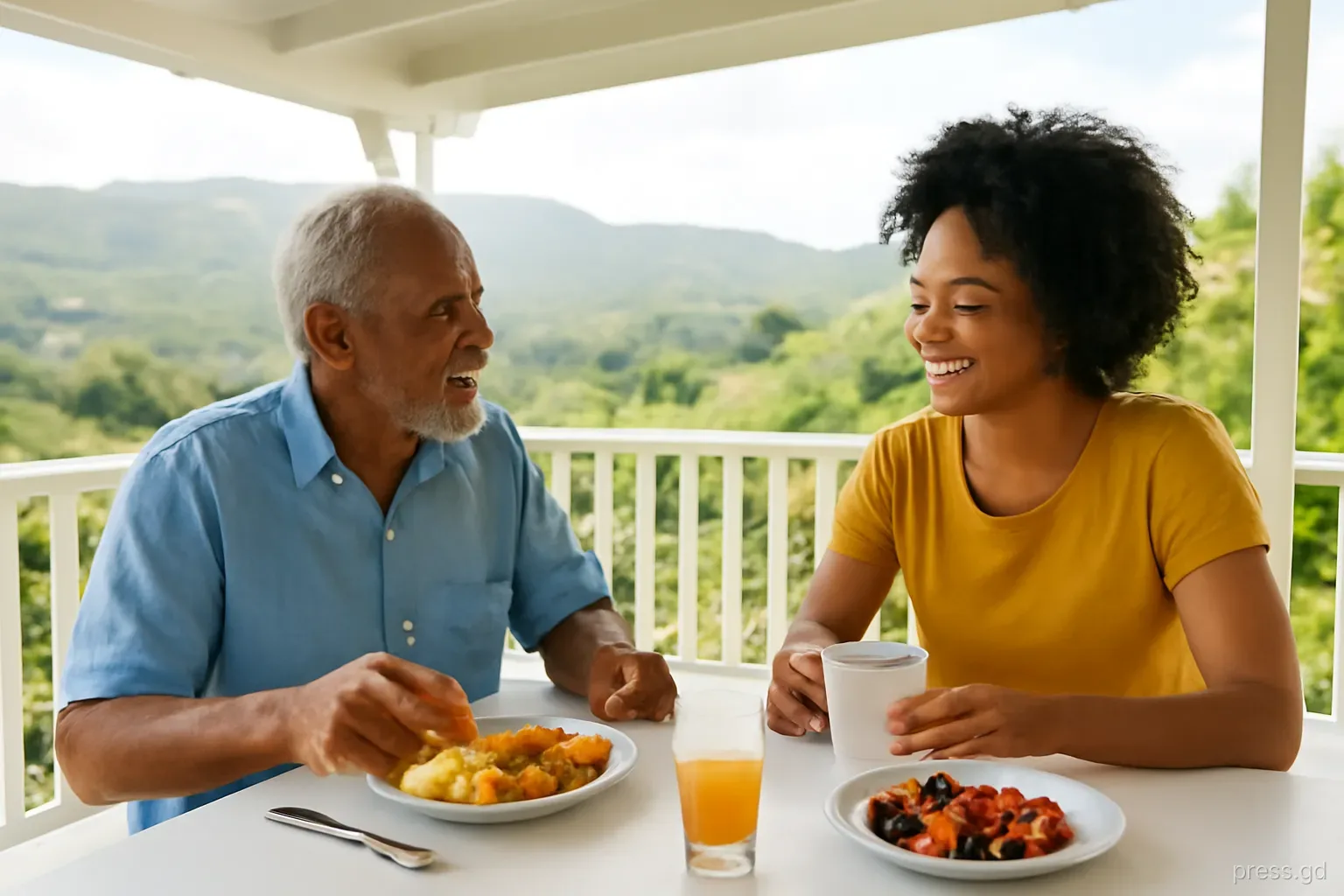
Food is another marker. Oil down, the national dish of breadfruit, salted meat, callaloo and dumplings cooked in coconut milk, is shared at gatherings and associated with community. Nutmeg, cocoa and spices are not only exports but part of how Grenadians describe themselves.
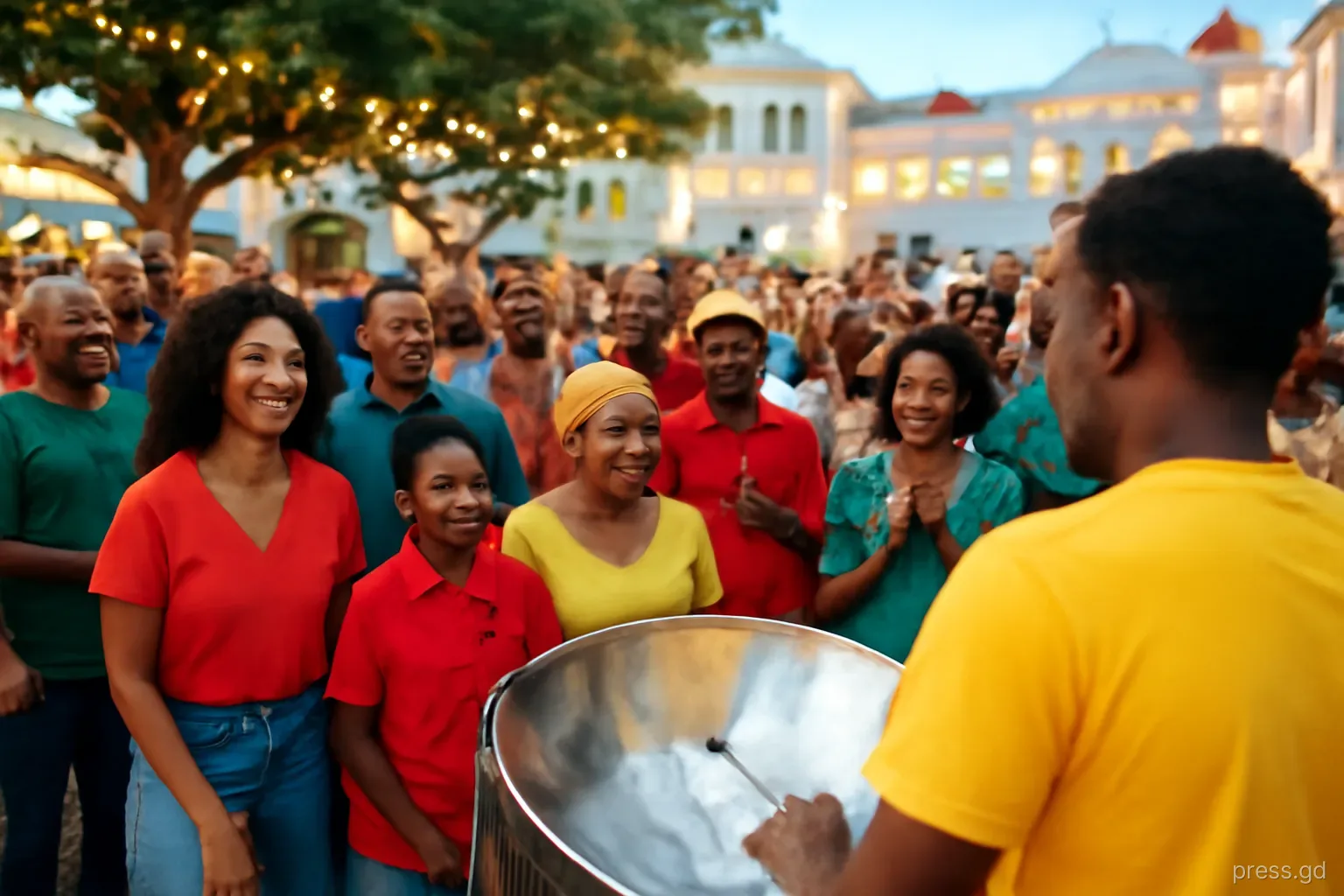
Music, carnival and sport carry identity across borders. Spicemas in August draws diaspora visitors home, and Grenadian soca artists perform for communities in New York, Toronto and London. Victories by athletes such as Kirani James and Anderson Peters are celebrated as national achievements that unite people at home and abroad.
How identity is counted and recorded
Official data on ancestry comes from the national census, which asks people to describe their ethnic background and religion. Categories have changed between censuses, and people of mixed heritage may describe themselves differently from one census to the next, so comparisons over time should be made carefully.
Family records offer another window. Church baptismal and marriage registers, civil registration of births and deaths, estate records from the slavery era and indenture records for Indian immigrants all hold traces of Grenadian ancestry, though many records were damaged over time, including by hurricanes.
Increasingly, Grenadians at home and abroad use genetic ancestry testing alongside family stories and records. Results can reveal connections to particular regions of Africa, India or Europe, but they are estimates and should be read with caution. For most people, identity rests less on percentages than on family, community and shared history.
Questions of belonging today
Migration in and out of Grenada raises recurring questions about who belongs and on what terms. Debates commonly touch on:
- The diaspora: Grenadians abroad and their children born overseas often feel strongly Grenadian. Discussions include voting rights for citizens abroad, which currently depend on residence and registration rules, and the role of diaspora associations.
- Returning nationals: people who come back after decades away sometimes find they are seen as outsiders, while bringing skills and savings.
- Citizenship by investment: the programme grants citizenship to foreign investors who meet its requirements. Supporters cite revenue and investment; critics question what citizenship means when it can be acquired without living in the country.
- Regional migrants: workers from other Caribbean countries contribute to the economy, and CARICOM free movement arrangements allow certain categories to live and work in Grenada. Their integration raises questions of jobs and services.
- Students and expatriates: St. George's University brings thousands of international students, and foreign retirees and remote workers form visible communities, especially in the south. Their relationships with local communities vary.
- Colour and class: lighter skin and certain surnames once signalled status, a colonial legacy that has weakened but still surfaces in conversation.
Mistakes outsiders make when discussing Grenadian identity
Treating the Caribbean as one place. Grenadians share much with other Caribbean people, but their history, from Fédon's rebellion to the revolution of 1979 to 1983, and their culture are distinct. Confusing Grenada with other islands is a common irritation.
Assuming race works as it does elsewhere. Categories used in the United States or Britain do not map neatly onto Grenadian society, where mixed heritage is common and class, colour and family matter in different ways.
Overlooking the sister islands. Carriacou and Petite Martinique are part of the nation, with their own identities. Describing Grenada only as the mainland misses an important part of the country.
Romanticising rural life. Village life has strong community bonds, but also economic hardship and change. Identity is not frozen in tradition; young Grenadians blend local and global influences.
Ignoring the diaspora. Grenadian identity extends well beyond the islands. Communities abroad influence politics, culture and family life at home.
Frequently asked questions
What is the ethnic make-up of Grenada?
The large majority of Grenadians are of African descent, with significant numbers of mixed heritage and smaller communities of East Indian, European and Middle Eastern descent, plus recent arrivals from many countries. The Central Statistical Office's census reports provide official breakdowns.
When did East Indians arrive in Grenada?
Indentured labourers from India began arriving in 1857 to work on estates after the end of slavery. Many settled in rural parishes such as St Patrick and St Andrew, and their descendants are now an integral part of Grenadian society.
What language do Grenadians speak?
English is the official language. Most people also speak Grenadian Creole English in daily life. French Creole, or patois, was once widely spoken but now survives mainly among a small number of older people and in place names.
Do Carriacouans see themselves as Grenadian?
Yes, Carriacouans are Grenadian citizens and share national identity, but they also have a strong distinct island identity shaped by their own traditions, history and community life. Many feel the sister islands deserve more attention from the central government.
Can children of Grenadians born abroad become citizens?
In many cases, yes, citizenship can pass by descent, subject to the constitution and citizenship law. Requirements and documentation vary, so check with the relevant government office or a Grenadian embassy or consulate.
What is Grenada's national dish?
Oil down is widely regarded as the national dish. It is a one-pot meal of breadfruit, salted meat, dumplings, callaloo and other ingredients cooked slowly in coconut milk, and is often prepared for gatherings and community events.