
On 27 September 2026, Slinger Francisco, known to the world as the Mighty Sparrow, died in New York at the age of 91. Tributes poured in from Trinidad and Tobago, where he built his career and was honoured as a national icon, and from across the Caribbean diaspora. In Grenada, the news carried a particular note: the Calypso King of the World had been born in a fishing village on the island's west coast.
Sparrow left Grenada as a toddler and his story belongs mostly to Trinidad. Yet his Grenadian birth has always mattered to Grenadians, as a point of pride and a reminder of how closely the two countries are bound by migration and music. This profile sets out the documented facts of his life, his achievements and the meaning of his Grenadian roots.
Born in Grand Roy
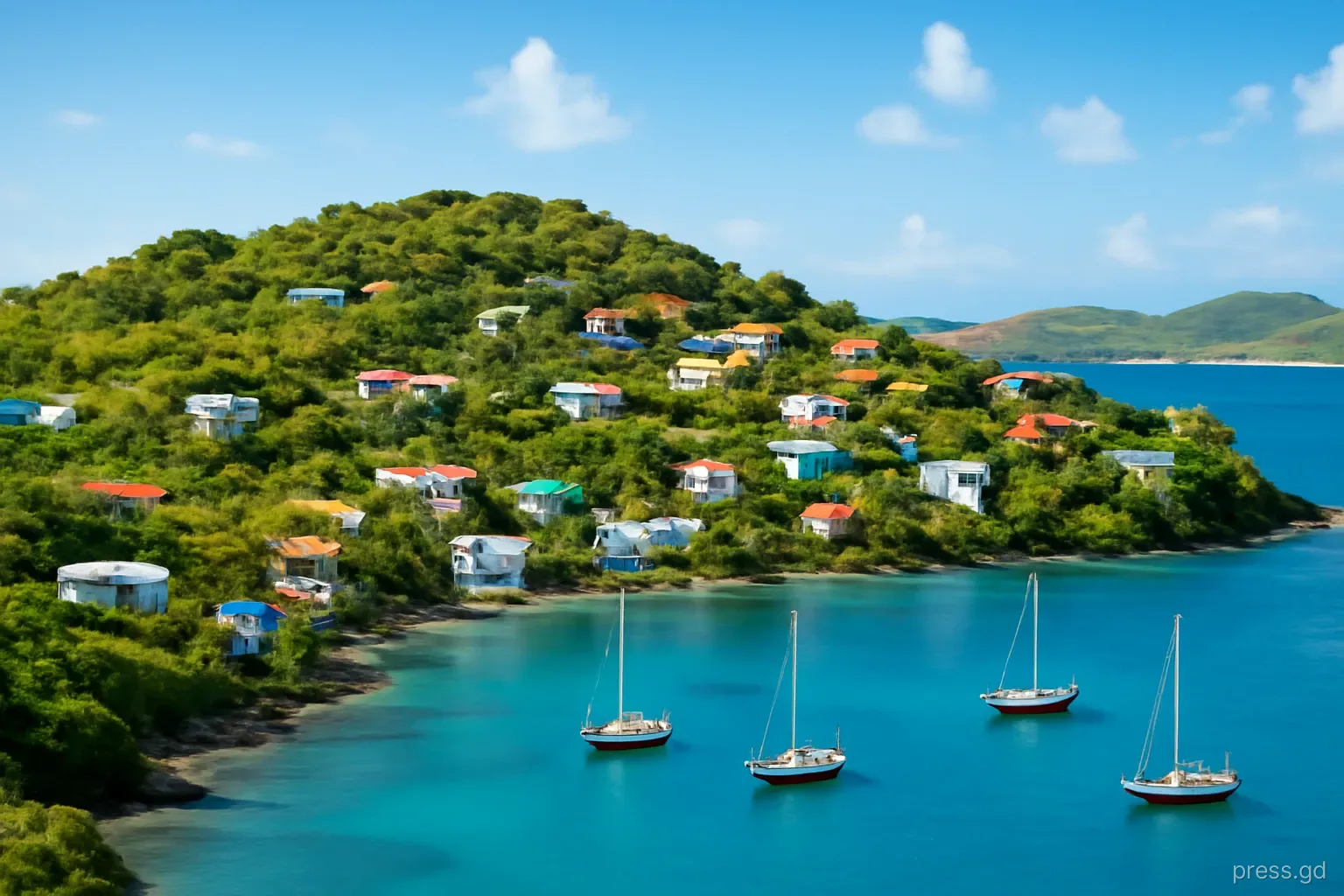
Slinger Francisco was born on 9 July 1935 in Grand Roy, a small coastal village in the parish of St John, a short distance south of Gouyave. Grand Roy was, and is, a community of fishing and small farming, typical of the western coast with its steep green hills dropping to dark-sand bays.
In 1937, when he was about two years old, his family moved to Trinidad, part of a long stream of Grenadian migration to the larger, more industrialised neighbouring island. Some sources give 1938, but most agree on 1937. Grenadians had been moving to Trinidad for decades in search of work on estates, in the oilfields and in Port of Spain, and many Trinidadian families today have Grenadian roots.
He grew up in Port of Spain, attended school there and sang in a Catholic church choir, an early grounding in melody and performance that would later inform his range as a singer. By his teens he was performing calypso, the music that dominated Trinidad's carnival and its street culture.
The breakthrough and the titles
1956: Jean and Dinah. Sparrow's breakthrough came at the 1956 Trinidad Carnival with "Jean and Dinah", a witty song about the changing fortunes of women who had depended on American servicemen as the US base presence wound down. It won him the Calypso King title and the Road March, a rare double.
A record of wins. Over his career he won Trinidad's Calypso King or Calypso Monarch title eight times and the Road March eight times, and he twice won the Calypso King of Kings competition.
The Calypso King of the World. His international touring, recordings and longevity earned him the informal title of Calypso King of the World, by which he was widely known.
A vast catalogue. He recorded hundreds of songs over six decades, ranging from political commentary to romance, humour and storytelling, and performed at major venues including Madison Square Garden.
A voice for the region's politics
Sparrow was more than an entertainer. Like the best calypsonians, he commented on the politics of his time, and his songs have become historical sources in their own right. In "Federation", he responded to the collapse of the West Indies Federation, the regional union that had included Grenada, with a sharp commentary on the islands' failure to hold together.
Other songs dealt with independence, racial politics, corruption and the behaviour of politicians, as well as international events. His willingness to take on powerful figures, combined with his musical gifts, made him a model for later generations of calypsonians across the Caribbean, including in Grenada.
He was also an advocate for calypsonians' rights. Early in his career he took a public stand over the prize money and treatment of calypsonians at carnival competitions, an episode often cited in histories of the art form as an early assertion of artists' value.
Honours and recognition
Sparrow received many honours, mostly from Trinidad and Tobago, where he spent his career. The sequence of awards over more than four decades shows how his standing grew from popular star to national institution.
- Hummingbird Medal (1969). One of Trinidad and Tobago's national awards, recognising his contribution to the country's culture.
- Honorary doctorate (1987). Awarded by the University of the West Indies, after which he was sometimes styled Dr Slinger Francisco.
- Chaconia Medal (1993). A further national honour from Trinidad and Tobago.
- Order of the Republic of Trinidad and Tobago (2014). The country's highest honour.
- Regional standing. Across the Caribbean, and in Grenada in particular, he was celebrated as one of the defining cultural figures of the twentieth century.
- Competitive legacy. His run of Calypso King, Road March and King of Kings victories set a benchmark that later calypsonians, in Trinidad and elsewhere, are still measured against.
Why his Grenadian birth matters
For Grenadians, Sparrow's story captures something essential about the island's relationship with Trinidad. Generations of Grenadians have moved there for work, many settling permanently, and their children and grandchildren have shaped Trinidadian life in politics, business and culture. Sparrow is the most famous example, but far from the only one.
His career also illustrates how music moves around the region. Calypso developed in Trinidad, but it absorbed influences from across the islands, and Grenadian calypso and soca have always been in dialogue with the Trinidadian scene. Sparrow's Grenadian roots are a reminder that this exchange has always gone both ways.
The pattern of his family's move is worth noting for what it says about the 1930s. Those were years of economic hardship and labour unrest across the British Caribbean, and Trinidad's oil industry and larger economy offered prospects that small agricultural islands could not. A child leaving Grand Roy in 1937 was part of a regional story of workers seeking wages wherever they could find them.
Grenadians have honoured him on visits and in tributes over the years, and his death prompted reflection on the island about the many Grenadians whose talents flourished abroad. The question of how small islands retain and celebrate their emigrant talent is one that Grenada continues to discuss.
Later life and his death in 2026
Sparrow lived for many years in New York, home to a large Caribbean diaspora, while continuing to perform in Trinidad and across the region. In his later years he faced periods of serious illness, and his public appearances became less frequent, though he remained a revered figure at carnival events and tributes.
He died on 27 September 2026 in New York, after what his family described as a brief illness. Calypso organisations, governments and fellow artists across the Caribbean paid tribute, describing him as an institution and a defining voice of calypso.
For readers new to his work, a good approach is to start with the classics, such as "Jean and Dinah", and then explore his political songs alongside some knowledge of the events they address. A common mistake is to treat him only as a party singer; his best work rewards close listening to the lyrics, which is where much of his genius lies.
Songs that show his range
"Jean and Dinah". The 1956 breakthrough, a sly social commentary on the end of an era around the American base presence in Trinidad, still played at carnival time decades later.
"Federation". His response to the collapse of the West Indies Federation, assigning blame to the islands' leaders with characteristic bite. Essential listening for anyone interested in Grenada's place in the failed union.
"Dan Is the Man (in the Van)". A satire on colonial-era schoolbooks and the nonsense rhymes children were made to learn, often cited in discussions of education and post-colonial identity.
"Congo Man". A controversial, comic song that shows his willingness to provoke; it has been debated for its humour and its racial content, which says something about how calypso tests the limits of taste.
Ballads and love songs. Beyond calypso's sharp edges, Sparrow recorded romantic ballads and covers that displayed the warmth of his voice, a side less well known to younger listeners.
Frequently asked questions
Was the Mighty Sparrow born in Grenada?
Yes. Slinger Francisco, the Mighty Sparrow, was born on 9 July 1935 in Grand Roy, a fishing village in the parish of St John on Grenada's west coast. His family moved to Trinidad in 1937, where he grew up and built his career.
When did the Mighty Sparrow die?
The Mighty Sparrow died on 27 September 2026 in New York at the age of 91, after what his family described as a brief illness. Tributes came from across the Caribbean, especially Trinidad and Tobago and Grenada.
What was the Mighty Sparrow's first big hit?
His breakthrough came with "Jean and Dinah" at the 1956 Trinidad Carnival. The song won him both the Calypso King title and the Road March, launching a career that lasted more than six decades.
How many Calypso King titles did Sparrow win?
He won Trinidad's Calypso King or Calypso Monarch title eight times, the Road March eight times and the Calypso King of Kings competition twice, a record that made him one of the most decorated calypsonians in history.
Is Grand Roy worth visiting?
Grand Roy is a small working fishing village rather than a tourist attraction, lying on the west coast road between St George's and Gouyave. It is a pleasant stop on a drive up the coast, and a quiet way to connect with Sparrow's beginnings.