Maurice Rupert Bishop is the most internationally recognised Grenadian politician of the twentieth century, and the most mourned. For four and a half years he led the People's Revolutionary Government, an experiment that drew admirers and enemies from Havana to Washington. On 19 October 1983 he was executed at Fort Rupert by soldiers of the army his own revolution had created, days before American and Caribbean forces landed on the island.
His story is often told as either heroic or cautionary, depending on the teller. This profile takes a different approach: eight turning points in his life, each grounded in documented events, that together explain how a young lawyer from St George's came to lead a revolution and how that revolution came to destroy him.
1. Born abroad, raised in St George's
Bishop was born on 29 May 1944 in Aruba, where his Grenadian parents, Rupert and Alimenta Bishop, were working at a time when the island's oil refinery drew labour from across the Caribbean. The family returned to Grenada when he was a child, and he grew up in St George's.
He attended Presentation Brothers' College, a Catholic boys' secondary school in the capital, where he showed early signs of leadership and political interest, becoming involved in student and youth organisations. Contemporaries describe him as articulate, tall and confident, qualities that would later make him an effective public speaker.
His upbringing placed him in Grenada's small urban middle class rather than among the estate workers who formed Eric Gairy's base. That background would shape both his politics and the way opponents characterised him, as an intellectual radical rather than a man of the people, a charge his later popularity largely overcame.
2. London and the radical sixties
In the early 1960s Bishop went to Britain to study law, and he qualified as a barrister. London at that time was a centre of Caribbean and African political thought, alive with debates about decolonisation, Black Power, socialism and the failure of the West Indies Federation. Bishop joined West Indian student organisations and absorbed these currents.
The experience gave him both a profession and a political framework. Many of the people who later formed the leadership of the revolution, including Bernard Coard, had similar experiences of study abroad, and the ideas they encountered there shaped the programme they would bring home.
He returned to Grenada around 1970, at a moment when Black Power protests were shaking Trinidad and young people across the region were questioning the post-colonial order. He practised law and quickly became involved in political activism, taking up cases and causes that brought him into conflict with the Gairy government.
3 to 5. Building a movement against Gairy
3. The New Jewel Movement, 1973. In March 1973 Bishop's Movement for Assemblies of the People merged with the Joint Endeavour for Welfare, Education and Liberation, led by Unison Whiteman, to form the New Jewel Movement. Its manifesto called for popular participation, land reform and an end to Gairy's rule.
4. Violence and loss, 1973 and 1974. In November 1973 Bishop and other NJM leaders were severely beaten by police in Grenville and jailed. In January 1974, during protests against Gairy before independence, his father Rupert Bishop was shot and killed in St George's. These events made Bishop a national figure and hardened his opposition.
5. Leader of the Opposition, 1976. The NJM contested the 1976 elections as part of the People's Alliance with more established parties. The Alliance won six seats, and Bishop became Leader of the Opposition in parliament, giving him a formal platform for the first time.
6. The revolution of 13 March 1979
In the early hours of 13 March 1979, with Gairy abroad, armed members of the NJM seized the army barracks at True Blue and the radio station. Bishop announced the takeover on the renamed Radio Free Grenada, appealing for public support and promising an end to Gairy-era abuses. The coup was almost bloodless, and crowds came out in support.
Bishop became Prime Minister of the People's Revolutionary Government. The constitution was suspended, and the government ruled by decree through People's Laws. It launched programmes that remain part of its positive memory: a literacy campaign through the Centre for Popular Education, expanded health and education services, cooperatives and agro-industry, and the construction, with substantial Cuban assistance, of an international airport at Point Salines.
It also had a darker side. Elections were not held, political detainees were held without trial, and an independent newspaper was closed. Relations with the United States deteriorated sharply as the government aligned itself with Cuba and the Soviet bloc, and Washington viewed the airport as a potential military asset, a claim the PRG rejected.
7. The split of 1983
By 1983 the revolution faced economic strain, international pressure and internal division. Within the NJM's Central Committee, a faction associated with Deputy Prime Minister Bernard Coard argued that the party needed firmer Leninist discipline and proposed a system of joint leadership between Bishop and Coard. Bishop at first appeared to accept, then hesitated.
The dispute escalated rapidly. In mid-October Bishop was expelled from the party leadership and placed under house arrest. News of his detention spread, and public anger grew; for many Grenadians Bishop personally embodied the revolution, and his removal appeared to be a betrayal.
Historians continue to debate the details of these weeks, including the precise roles of individual leaders and the influence of foreign actors. The documented outline, however, is clear: a party at the head of a state with no elections had no peaceful mechanism to resolve a leadership dispute.
8. 19 October 1983
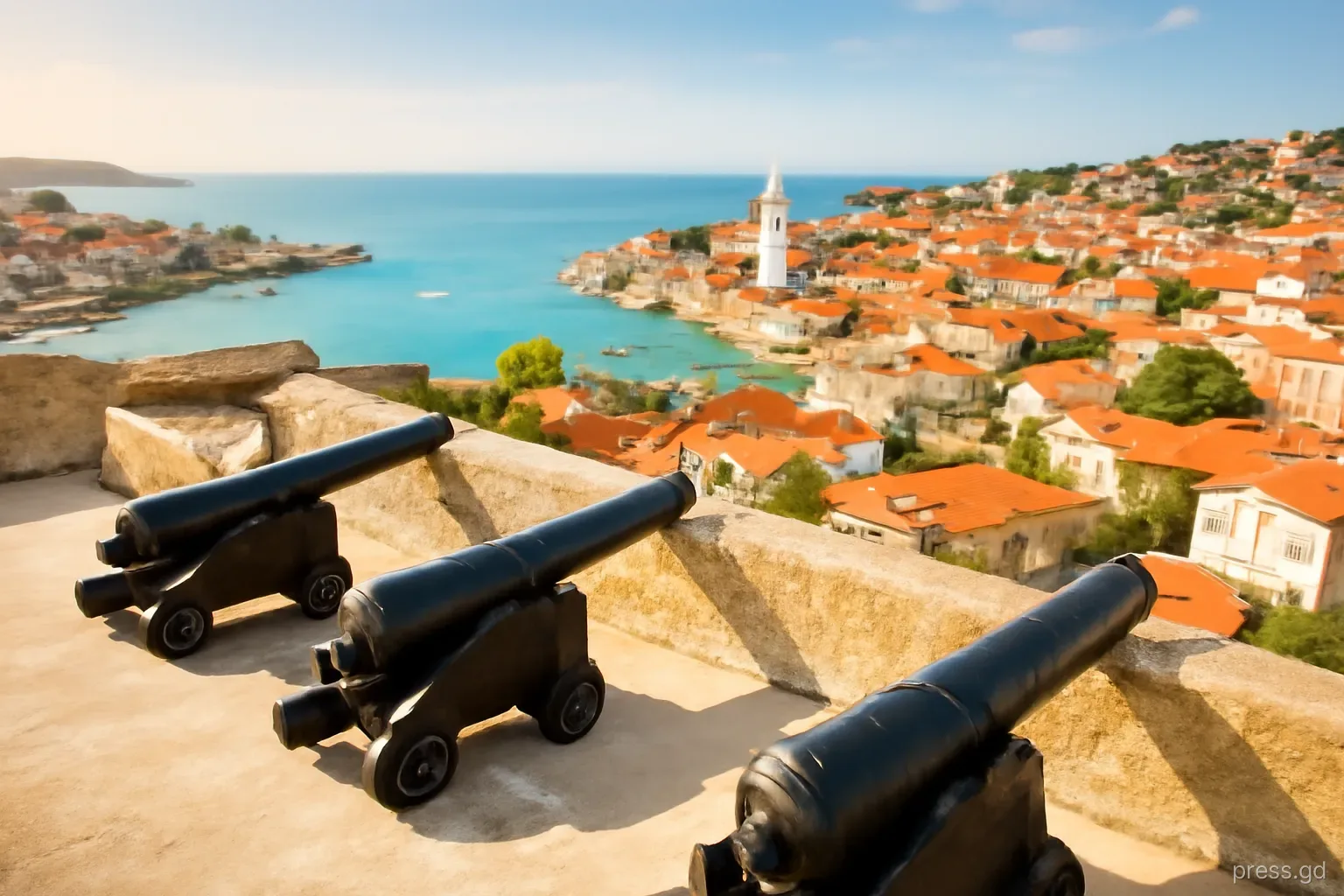
On 19 October a large crowd freed Bishop from house arrest and accompanied him to Fort Rupert, the army headquarters now known again as Fort George, above St George's. Soldiers loyal to the Central Committee arrived and opened fire, killing and wounding civilians. Bishop and several colleagues, including ministers Jacqueline Creft, Unison Whiteman and Norris Bain, were lined up and executed inside the fort.
Their bodies were never recovered, an unresolved wound that families and the public continue to raise. A Revolutionary Military Council briefly took control, and on 25 October forces from the United States and several Caribbean states landed. Members of the Central Committee and soldiers were later tried for the killings; several death sentences were commuted, and all those convicted had been released by 2009.
In 2009 the airport at Point Salines was renamed Maurice Bishop International Airport, a gesture of national reconciliation with his memory.
Each year on 19 October, Grenadians mark the anniversary with memorial services, wreath-laying and public discussion. The tone of these commemorations has shifted over time, from near silence in the years after 1983 to a more open, though still painful, national conversation about what happened and why.
Getting the history right
Bishop's story attracts strong feeling, and several errors recur in popular accounts.
- The revolution was not one man. The PRG was a collective project, and many of its policies came from colleagues and party structures, not Bishop alone.
- He was not killed by the Americans. He was executed by Grenadian soldiers six days before the intervention began.
- Fort Rupert and Fort George are the same place. The fort was renamed after Bishop's father during the revolution and later reverted to its older name.
- Popularity and democracy were different things. Bishop was widely popular, but his government did not hold elections, a point his admirers and critics both need to acknowledge.
- Memory is still raw. 19 October remains a painful date. Visitors discussing it with Grenadians should be aware that families of victims on all sides are still living.
Frequently asked questions
Where was Maurice Bishop born?
Maurice Bishop was born in Aruba on 29 May 1944 to Grenadian parents, Rupert and Alimenta Bishop, who were working there. The family returned to Grenada when he was a child, and he grew up in St George's.
How did Maurice Bishop die?
On 19 October 1983 Bishop was freed from house arrest by a crowd and went to Fort Rupert, the army headquarters. Soldiers loyal to the party's Central Committee then executed him and several colleagues. His remains have never been found.
What was the New Jewel Movement?
The New Jewel Movement was a political party formed in March 1973 by the merger of Bishop's Movement for Assemblies of the People and Unison Whiteman's JEWEL group. It led the 1979 revolution and formed the People's Revolutionary Government.
Why is Grenada's airport named after Maurice Bishop?
The international airport at Point Salines was built largely during Bishop's government with Cuban assistance. In 2009 it was renamed Maurice Bishop International Airport, widely seen as a step towards national reconciliation with the revolutionary period.
Was Maurice Bishop elected Prime Minister?
No. He became Prime Minister after the New Jewel Movement seized power on 13 March 1979. He had earlier been elected to parliament in 1976 and served as Leader of the Opposition, but the People's Revolutionary Government did not hold elections.