Grenada's general elections are intense, close-fought and personal. With about eighty thousand registered voters spread across fifteen constituencies, a few hundred votes can decide a seat, and the outcome in two or three marginal seats can decide who governs. The country has seen both landslides in which one party took every seat and knife-edge results decided by a single constituency.
This explainer covers how the system works: the constituencies, who can vote, how registration and voter ID cards work, what happens on nomination day and polling day, and why the results so often look more lopsided in seats than in votes. Parliament was dissolved on 2 October 2026, and a general election was called for 5 November 2026, so the rules below are being applied in practice.
Fifteen seats, first past the post
Grenada elects fifteen members to the House of Representatives, one from each constituency. The candidate with the most votes in a constituency wins the seat, even without a majority. This is the first-past-the-post system used in Britain and most of the Commonwealth Caribbean. The party that wins a majority of seats, eight or more, normally forms the government, and its leader becomes Prime Minister.
St George, the most populous parish, has five constituencies: St George North East, St George North West, St George South, St George South East and the Town of St George. St Andrew has four, St Patrick two, and St David, St John and St Mark one each. Carriacou and Petite Martinique together form one constituency. Constituency sizes vary, and boundaries are set by a constitutional process involving a Constituency Boundaries Commission.
Because of first past the post, small shifts in votes can produce large shifts in seats. A party can win a clear share of the national vote and still take every seat, which happened in 1999, 2013 and 2018. In 2022 the National Democratic Congress won nine seats to the New National Party's six, a closer result than several previous elections.
Who can vote
Age. Voters must be eighteen or older.
Citizenship and residence. Grenadian citizens can register, as can, under conditions set out in the elections law, some Commonwealth citizens who have lived in Grenada for a qualifying period. The details and evidence required should be checked with the Parliamentary Elections Office.
Registration. Only people on the register can vote. Registration takes place at registration offices in each constituency, and the register is closed when Parliament is dissolved. For the 2026 election, registration closed on 2 October.
Being in Grenada. There is no overseas voting for the general public. Grenadians abroad who are on the register must be in Grenada on polling day to vote. Each election, many members of the diaspora travel home for this reason.
Disqualifications. The law sets out circumstances in which a person cannot vote, for example certain mental incapacity findings or particular offences. These cases are limited and defined by statute.
Registering and getting a voter ID card
Registration is continuous between elections, but it is wise not to leave it until an election is in the air. The general process:
- Go to the registration office for the constituency where you live, which is administered under the Parliamentary Elections Office.
- Bring proof of identity and citizenship, such as a passport or birth certificate, and evidence of your address. Requirements can change, so confirm in advance.
- Complete the registration form and have your photograph and details taken.
- Collect your voter identification card when notified. The card serves as identification at the polling station and is widely used as general ID in Grenada.
- Check that your name appears on the published voters list for your constituency. Preliminary lists are published so errors can be corrected and objections made.
- If you move house, update your registration so you are listed in the right constituency.
From dissolution to nomination day
The life of a Parliament runs for up to five years from its first sitting, after which it dissolves automatically. In practice, Prime Ministers usually advise the Governor-General to dissolve Parliament earlier, choosing a date that suits the government. A general election must be held within ninety days of dissolution. Calling an early election is a legitimate tactical choice under the Westminster system and regularly provokes debate about whether Grenada should adopt fixed election dates, an idea that was one of the proposals rejected in the 2016 referendum.
After the writ is issued, a nomination day is set. Candidates file their nomination papers with the returning officer for each constituency, supported by a required number of registered voters, and pay a deposit, which can be lost if the candidate fails to win a minimum share of votes. For the 2026 election, nomination day was set for 15 October. Campaigning then becomes intense: motorcades, public meetings, door-to-door canvassing, music, social media and street-corner debates are all part of Grenadian electioneering.
Polling day and the count
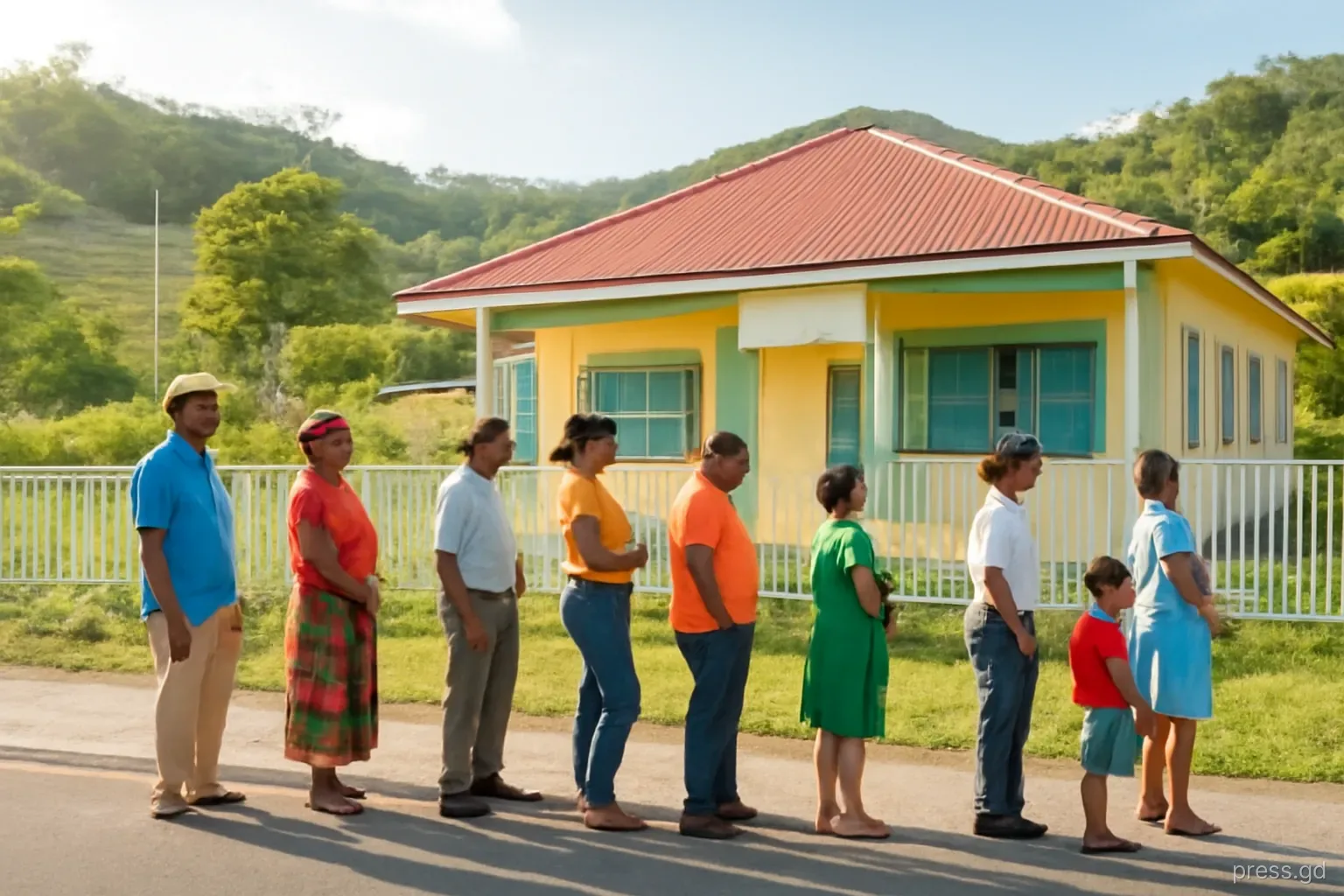
Polling stations, most often in schools and community buildings, open early in the morning and close in the late afternoon. Voters present their ID, have their names checked against the list, receive a ballot, mark it in private and place it in the box. Their finger is marked with indelible ink to prevent voting twice. Police officers on duty on polling day vote at an earlier special poll; in 2026 this was set for 2 November.
Party agents can be present at polling stations to observe. After the poll closes, ballots are counted at the polling station in the presence of agents, and the results are passed to the returning officer for the constituency, who declares the winner. Recounts can be requested in close contests. Results usually emerge on election night, and the overall outcome is often clear within hours.
Regional and international observer missions, often from CARICOM, the Organization of American States or the Commonwealth, have observed Grenadian elections. Their reports have generally found elections well run, while recommending improvements such as rules on campaign financing, which Grenada does not comprehensively regulate.
Common mistakes and misconceptions
Assuming your registration is current. Names can be removed from the list after long absences or other checks. Confirm your status well before an election, because registration closes when Parliament is dissolved.
Expecting to vote from abroad. There is no postal or embassy voting for ordinary voters. Plan travel if you intend to vote.
Reading the national vote as a seat count. Seat totals can exaggerate the margin between parties. Look at constituency results and vote shares together.
Thinking the Prime Minister is directly elected. Voters choose a constituency representative. The Prime Minister is the MP who leads the majority, appointed by the Governor-General.
Believing rumours about the count. Every election season brings claims on social media about rigged lists or results. Party agents watch the count at each polling station, and disputes go to election officials and, if necessary, to the courts through election petitions. Check claims against official results.
Recent general election results
Seat totals since 1999 show how first past the post shapes Grenadian politics. Three of the last six contests produced a clean sweep, while one was decided by a single seat. These are House of Representatives seats out of fifteen:
- 1999: New National Party 15, others 0. Keith Mitchell continues as Prime Minister.
- 2003: NNP 8, National Democratic Congress 7. One of the closest results possible.
- 2008: NDC 11, NNP 4. Tillman Thomas becomes Prime Minister.
- 2013: NNP 15, NDC 0. Keith Mitchell returns to office.
- 2018: NNP 15, NDC 0. A third clean sweep for the NNP.
- 2022: NDC 9, NNP 6. Dickon Mitchell becomes Prime Minister.
- 2026: a general election was called for 5 November 2026 after Parliament was dissolved on 2 October.
Frequently asked questions
How many constituencies does Grenada have?
Grenada has fifteen constituencies, each electing one member of the House of Representatives. St George has five, St Andrew four, St Patrick two, St David, St John and St Mark one each, and Carriacou and Petite Martinique together form one constituency.
Can Grenadians living abroad vote?
Only if they are registered and present in Grenada on polling day. There is no overseas, postal or embassy voting for ordinary voters, so many diaspora voters travel home for general elections. Check your registration status before travelling.
How often are elections held in Grenada?
A general election must be held at least every five years, because Parliament dissolves automatically five years after its first sitting. The Prime Minister can ask the Governor-General to dissolve Parliament earlier, and the election must then follow within ninety days.
Who runs elections in Grenada?
Elections are administered by the Parliamentary Elections Office, headed by the Supervisor of Elections, with returning officers and polling staff in each constituency. A proposal to create an independent Elections and Boundaries Commission was put to voters in 2016 but was not approved.
What ID do you need to vote in Grenada?
Registered voters are issued a voter identification card, which is the standard identification at the polling station. If you have lost your card, contact the registration office in your constituency well before polling day to arrange a replacement.