Grenada is divided into six parishes on the main island, St George, St John, St Mark, St Patrick, St Andrew and St David, plus the dependencies of Carriacou and Petite Martinique. People identify strongly with their parish, sports teams compete by parish and every address includes one. Yet no parish has an elected council, a mayor or a local budget. Since the late 1960s, Grenada has been governed almost entirely from the centre.
That arrangement surprises many newcomers, especially those from countries where local councils handle rubbish, roads and planning. This explainer covers how local government worked before, why it ended, who provides local services now and why the question of bringing it back keeps returning.
Local government before 1969
For much of the colonial period, Grenada had elected local bodies known as district boards, responsible for matters such as local roads, markets, sanitation and public health in their areas. St George's, as the capital, had its own arrangements. Members were elected, although under the restricted franchise of earlier decades only property owners could vote, and boards were often dominated by local elites.
After universal adult suffrage in 1951, the boards became more representative, and they operated with a degree of independence from the ministerial government in St George's. That independence was part of their value, and also a source of friction. Accounts of the period describe tensions between the central government of Eric Gairy and some of the boards, particularly in the capital.
Around 1969, legislation dissolved the local government bodies and transferred their functions to central government. The reasons given at the time centred on efficiency and finances; critics have argued that the boards' independence from the governing party was a factor. Either way, the outcome was a country of parishes without parish government.
The revolutionary experiment with councils
The People's Revolutionary Government of 1979 to 1983 created its own local structures: parish councils and zonal councils at village level, along with workers' councils and mass organisations. Residents could attend meetings, question ministers and officials, and raise local problems. Supporters saw this as a new form of participatory democracy, while critics noted that the councils had no legal powers or budgets and operated under the ruling party's direction.
When parliamentary government was restored in 1984, these councils did not continue as official bodies. The pre-1969 district boards were not revived either. Grenada thus returned to fully centralised administration, with the elected Member of Parliament for each constituency becoming, in practice, the main local political figure. Some veterans of the period argue that the habit of village meetings survived informally in community groups, while others regard the councils as a party instrument best left in the past; both views are still heard in debates about local democracy.
Who provides local services now
Without councils, services that local authorities handle in many countries are delivered by central ministries and statutory bodies. Here is who generally does what:
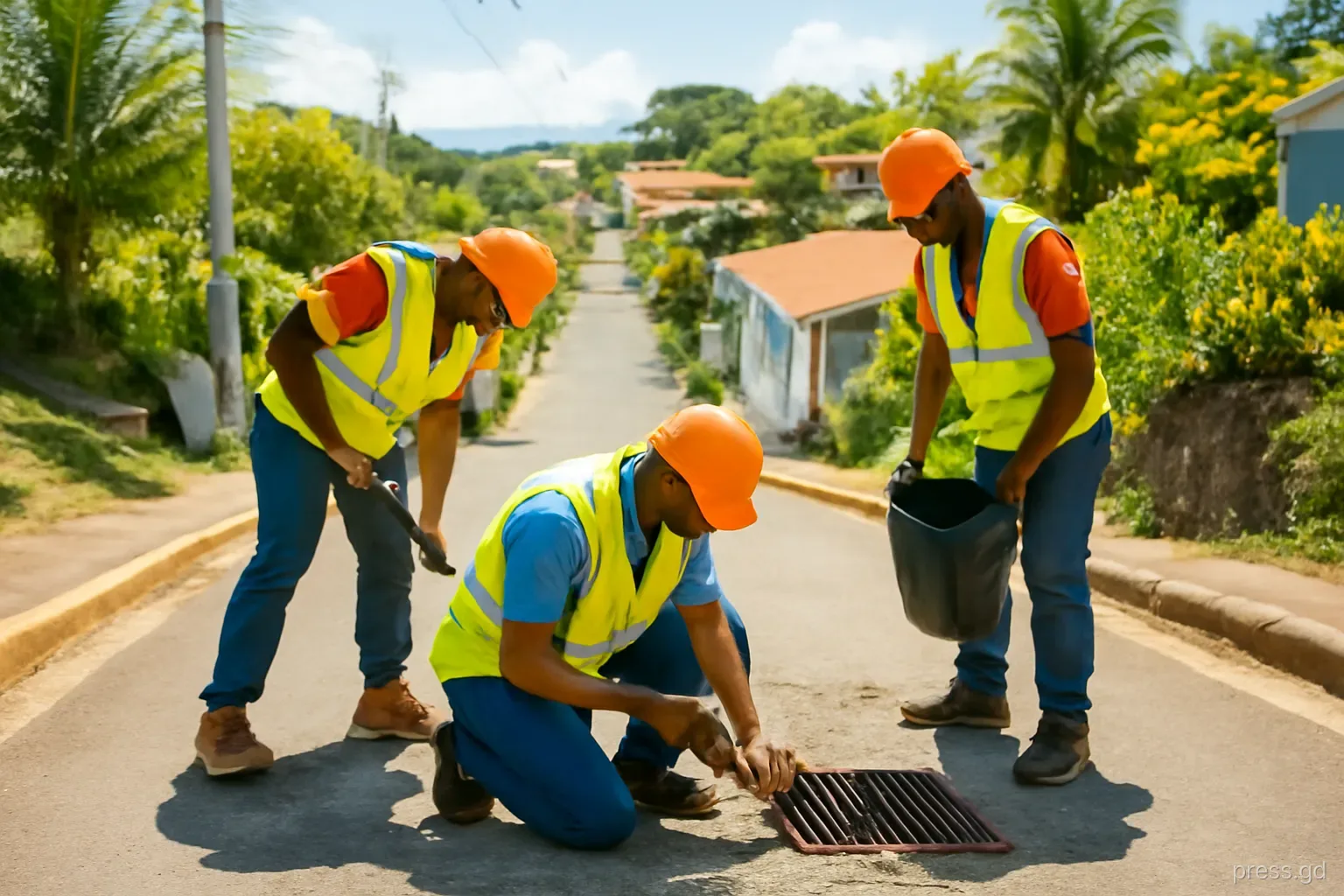
- Roads and drains: the ministry responsible for infrastructure and public works, which maintains main and feeder roads and drainage, often through contracted work crews.
- Water and sewerage: NAWASA, the National Water and Sewerage Authority, a statutory body.
- Electricity: GRENLEC, the Grenada Electricity Services company, under a regulatory framework.
- Rubbish collection: the Grenada Solid Waste Management Authority, which runs collection schedules and the landfill.
- Health centres and clinics: the Ministry of Health, through district medical stations in each parish.
- Schools: the Ministry of Education, together with church bodies that run many denominational schools.
- Planning and building approvals: the Physical Planning Unit and the Planning and Development Authority.
- Policing: the Royal Grenada Police Force, with stations in towns and larger villages.
Carriacou and Petite Martinique: a partial exception
Carriacou and Petite Martinique have a distinct administrative arrangement. A ministry for Carriacou and Petite Martinique affairs, based in Hillsborough, coordinates government services on the two islands, and many central government functions have local offices there. The minister responsible is often, though not always, the MP for the constituency or a senator. Local government as a portfolio has at times been grouped with this ministry.
Even so, Carriacou and Petite Martinique do not have an elected local council with its own budget. Residents have long argued that decisions taken in St George's do not always reflect the realities of island life, from ferry schedules to land use. Those arguments became more pressing after Hurricane Beryl in July 2024 devastated much of the infrastructure and housing on both islands, and the pace and direction of reconstruction became a central local concern.
How residents actually get local problems fixed
The constituency MP. MPs typically keep a constituency office and hold meetings with residents. Many local problems, from a broken streetlight to a blocked drain, are raised through the MP, who takes them to the relevant ministry.
Direct contact with the agency. Water, electricity and rubbish problems usually go straight to NAWASA, GRENLEC or the solid waste authority. Logging a report and keeping its reference is more effective than relying on informal contacts alone.
Community groups. Village development committees, sports clubs, church groups and community councils organise clean-ups, maintain playing fields and lobby for improvements. Some receive support from government community development programmes.
The media and social media. Call-in radio programmes and social media posts with photographs are widely used to draw attention to local problems, often prompting a response faster than formal channels.
The debate about bringing local government back
Calls to restore elected local government have come from commentators, civic organisations and politicians across the spectrum for decades, and the idea appears periodically in party platforms and government statements. Arguments in favour include bringing decisions closer to residents, relieving MPs of routine casework, building political experience at local level and giving Carriacou and Petite Martinique more control over their own affairs.
Arguments against, or for caution, include cost in a small state with limited revenue, the risk of duplicating services, the shortage of trained administrators and the concern that local councils could become another arena for party rivalry. Most proposals envisage starting with a clear legal framework and defined functions rather than reviving the old boards unchanged. Whether and how this happens is a decision for future governments and Parliament; for now, Grenada remains among the more centralised states in the Commonwealth Caribbean.
Where parishes still matter
Even without councils, parishes structure much of Grenadian life. Government statistics, census results and health data are reported by parish. Police divisions, district medical stations and school zones broadly follow parish lines. Constituency boundaries are drawn within parishes. Sport is organised heavily by parish and village, and inter-parish rivalries in cricket and football are part of local identity.
Parish towns act as service centres: Grenville in St Andrew, Gouyave in St John, Victoria in St Mark, and Sauteurs in St Patrick each have markets, banks, post offices and government offices that serve the surrounding countryside, while St David, without a single main town, is served by a string of villages and by St George's. Cultural events often have a parish identity, from Fisherman's Birthday in Gouyave to the Rainbow City events in Grenville. For newcomers, learning the parishes is the first step to understanding how services are delivered and where to go for them.
Common misconceptions about local administration
"The parish church runs the parish." The names of parishes come from the church parish system of colonial times, but churches have no civil authority today. They remain important community institutions, running schools and social programmes, without any governing role.
"Villages have official headmen or chiefs." There is no formal village authority in Grenada. Community leadership comes from MPs, church ministers, teachers, sports club officials and respected residents rather than an appointed office.
"Carriacou has its own government." Carriacou and Petite Martinique have a dedicated ministry and local offices, but they are part of the national government and send one MP to the House of Representatives.
"Someone local decides on planning." Planning permission is decided nationally, through the Physical Planning Unit and the Planning and Development Authority, not by a parish body. Neighbours can raise concerns, but there is no local planning committee to lobby.
Frequently asked questions
Does Grenada have local councils or mayors?
No. Grenada has no elected parish councils, town councils or mayors. Local government bodies were dissolved around 1969, and services are now delivered by central government ministries and statutory bodies. Members of Parliament act as the main local political representatives.
What are the parishes of Grenada?
The main island has six parishes: St George, St John, St Mark, St Patrick, St Andrew and St David. Carriacou and Petite Martinique are dependencies with their own administrative arrangements. Parishes remain important for identity, addresses, sport and statistics, though they have no elected government.
Who is responsible for rubbish collection in Grenada?
The Grenada Solid Waste Management Authority handles household rubbish collection and landfill operations. Collection days vary by area. Missed collections or illegal dumping can be reported to the authority directly, and community clean-up campaigns supplement its work.
Who runs Carriacou and Petite Martinique?
Carriacou and Petite Martinique are governed by the national government in St George's, with a dedicated ministry for their affairs based in Hillsborough. They elect one MP together. There is no separate elected island council.
Will Grenada bring back local government?
The idea has been discussed for decades and appears in political debate from time to time, but restoring elected local government would require new legislation, funding and administrative capacity. Any change would be decided by Parliament, and no timetable has been fixed.