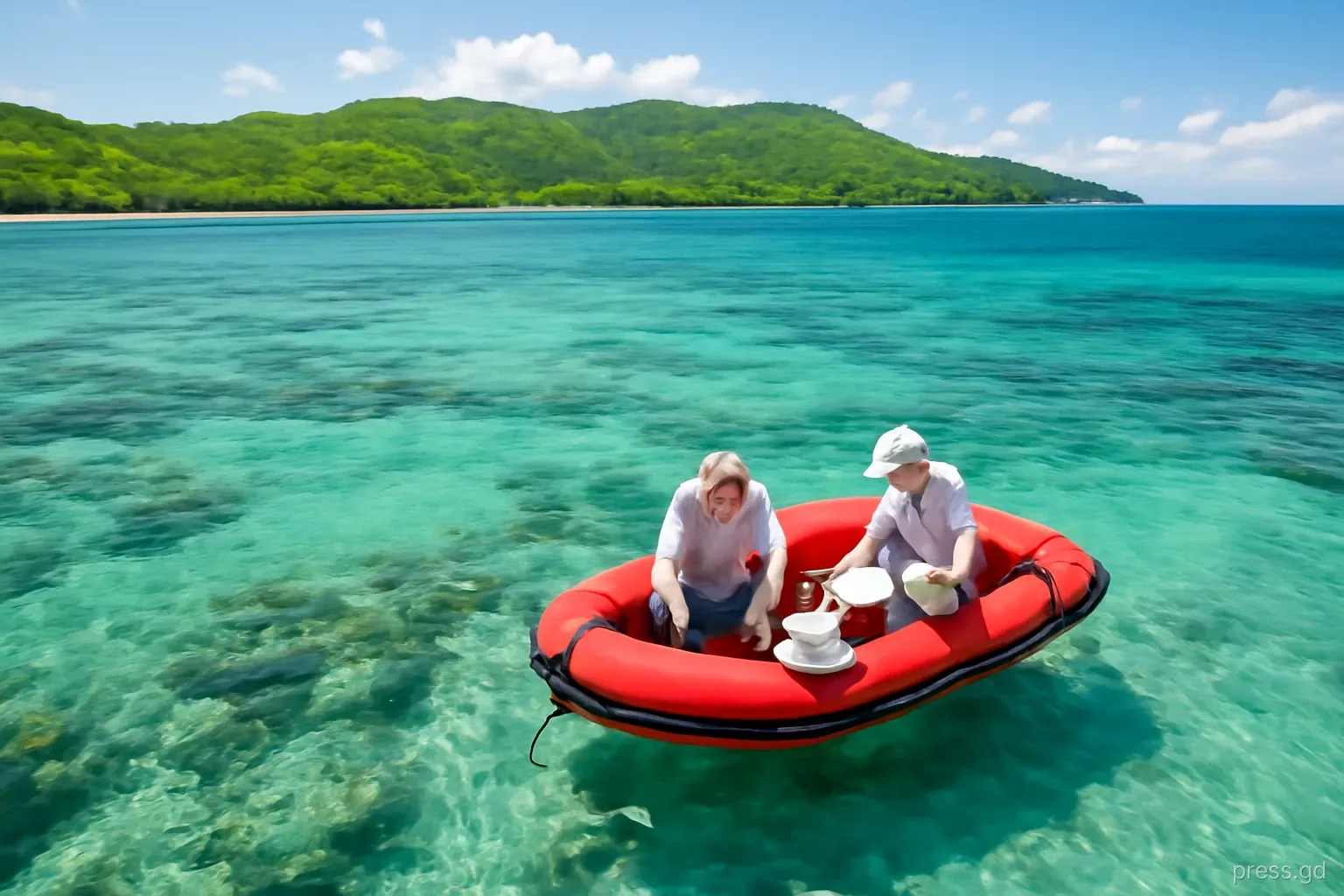
Grenada's land area is small, but the sea around it, including the waters out to the Grenadines and the deep basins to the west, is many times larger. For a country that has long depended on beaches, fishing boats and visiting yachts, it is not surprising that the idea of a blue economy, growth based on the ocean that does not destroy it, became a central theme of national planning in the 2010s.
Grenada produced what the World Bank described as the region's first Blue Growth Coastal Master Plan, and it featured as a case study in the Bank's 2016 report on blue economies in the Caribbean. The phrase now appears in budget speeches, investment pitches and NGO reports, often with different meanings. This explainer unpacks what it covers, what has actually been done, and why some critics talk about “bluewashing”.
A definition that does real work
At its simplest, the blue economy means economic activity that depends on the ocean and coasts: fishing, tourism, shipping, yachting, marine research, aquaculture and potentially renewable energy. What distinguishes it from ordinary ocean industry is the sustainability condition. Activity counts as blue growth only if it keeps reefs, fish stocks, mangroves and water quality healthy enough to support the same activity in the future.
That condition is what turns a slogan into a planning tool. It implies that some activities should be limited, zoned or redesigned: an overfished species may need a closed season, a reef may need a no-anchoring zone, a coastal development may need to keep mangroves intact. In practice, the hard decisions lie in those trade-offs.
For Grenada, the idea had obvious appeal. Tourism, much of it beach and sea-based, is the largest earner of foreign exchange. Fishing supports communities such as Gouyave, Grenville and the fishing villages of Carriacou. Yachting brings visitors to the marinas of the south coast and the anchorages of Carriacou. All of them depend on a healthy sea.
What the Blue Growth Coastal Master Plan set out
Principles. The plan emphasised environmental sustainability, jobs and alternative livelihoods, good governance, and the need to plan for climate and disaster risk.
Centres of excellence. It identified nine areas around the country where particular blue industries could cluster. Northern Grenada, for example, was highlighted for marine research because of its clear waters, leatherback turtle nesting beaches near Levera and the nearby underwater volcano Kick 'em Jenny.
Integrated planning. Rather than treating tourism, fisheries and conservation as separate silos, the plan aimed to coordinate them through shared coastal and marine planning.
Investment pipeline. It was also intended to attract investment in projects such as marine research facilities, sustainable aquaculture and upgraded fisheries infrastructure.
Regional model. The plan was presented as a template that other Eastern Caribbean states could adapt, and it fed into regional dialogue on ocean governance.
Money and regional projects
The plan was followed by financing. The World Bank approved a blue growth development policy credit for Grenada in 2018, budget support tied to policy reforms in areas such as fisheries management, coastal planning and the business environment. Reports from the time give figures in the range of US$30 to 35 million for the first operation; the exact amount is best checked against official documents.
In 2017 the World Bank also launched the Caribbean Regional Oceanscape Project, covering Grenada, Dominica, Saint Kitts and Nevis, Saint Lucia and Saint Vincent and the Grenadines, to strengthen ocean governance and coastal planning across the Eastern Caribbean. The Organisation of Eastern Caribbean States has its own regional ocean policy that sets shared principles.
On the statistical side, Grenada's Central Statistical Office has worked on measuring the ocean economy, an important step because it is hard to manage what is not counted. Separating ocean-based activity from the rest of tourism, transport and trade in national accounts is technically difficult and still a work in progress.
The ocean industries in question
When Grenadian officials talk about the blue economy, they usually mean some combination of the following sectors:
- Coastal and marine tourism: beach hotels, dive and snorkel operators, the underwater sculpture site at Molinière, boat tours and cruise calls in St George's.
- Yachting: marinas and boatyards along the south coast, chartering, and anchorages in Carriacou and around the Grenadines, which bring year-round spending and seasonal crews.
- Fisheries: small-scale fishing for tuna, mahi-mahi and reef species, much of it from open boats, with landing sites and markets across the islands.
- Marine protected areas: sites such as Molinière-Beauséjour on the west coast, Woburn and Clarke's Court Bay in the south, and Sandy Island/Oyster Bed in Carriacou, which support both conservation and tourism.
- Research and education: marine science programmes linked to St. George's University and regional partners.
- Potential new sectors: aquaculture and sea moss farming, marine renewable energy and biotechnology, most still small or exploratory.
The critique: blue economy or bluewashing?
Not everyone accepts the label at face value. Caribbean civil society groups, including the regional organisation CANARI, have asked whether the blue economy sometimes becomes a fresh coat of paint on familiar coastal development: large hotels on beaches, marinas in sensitive bays, dredging and reclamation, presented as sustainable because they involve the sea.
The concern centres on who benefits and who decides. Fishers, vendors and coastal communities may find access to beaches and landing sites narrowed by private developments. Environmental assessments may be thin or published late. Investment incentives and citizenship-by-investment funding can favour large projects over small, locally owned businesses.
Supporters reply that investment is necessary to create jobs and that the framework gives regulators a basis to demand better standards. The fairest reading is that the blue economy is a set of principles whose value depends on enforcement. A project does not become sustainable because it appears in a blue growth plan; it becomes sustainable if its environmental conditions are set, monitored and enforced.
How to judge a 'blue' project
For readers assessing a proposal described as blue growth, a few practical questions cut through the language:
- Has an environmental impact assessment been carried out, and was it made available for public comment before approval?
- Does the project keep public access to the beach and shoreline, and does it affect fishers' landing sites or traditional routes?
- What happens to mangroves, seagrass and reefs in and around the site, and are there binding conditions to protect them?
- How will wastewater, solid waste and construction run-off be handled, both during building and once the project operates?
- Who owns the project, how many local jobs and businesses it supports, and whether those benefits are written into agreements.
- Which agency monitors compliance after approval, and whether results are published.
Where the blue economy meets climate change
Every ocean industry in Grenada is exposed to a warming climate. Coral bleaching reduces the reef life that draws divers and feeds fish. Rising seas and stronger swells erode the beaches that hotels depend on. Sargassum seaweed, which has arrived in large quantities in recent years, piles up on east-facing shores and disrupts fishing. Hurricanes damage marinas, boats and coastal roads.
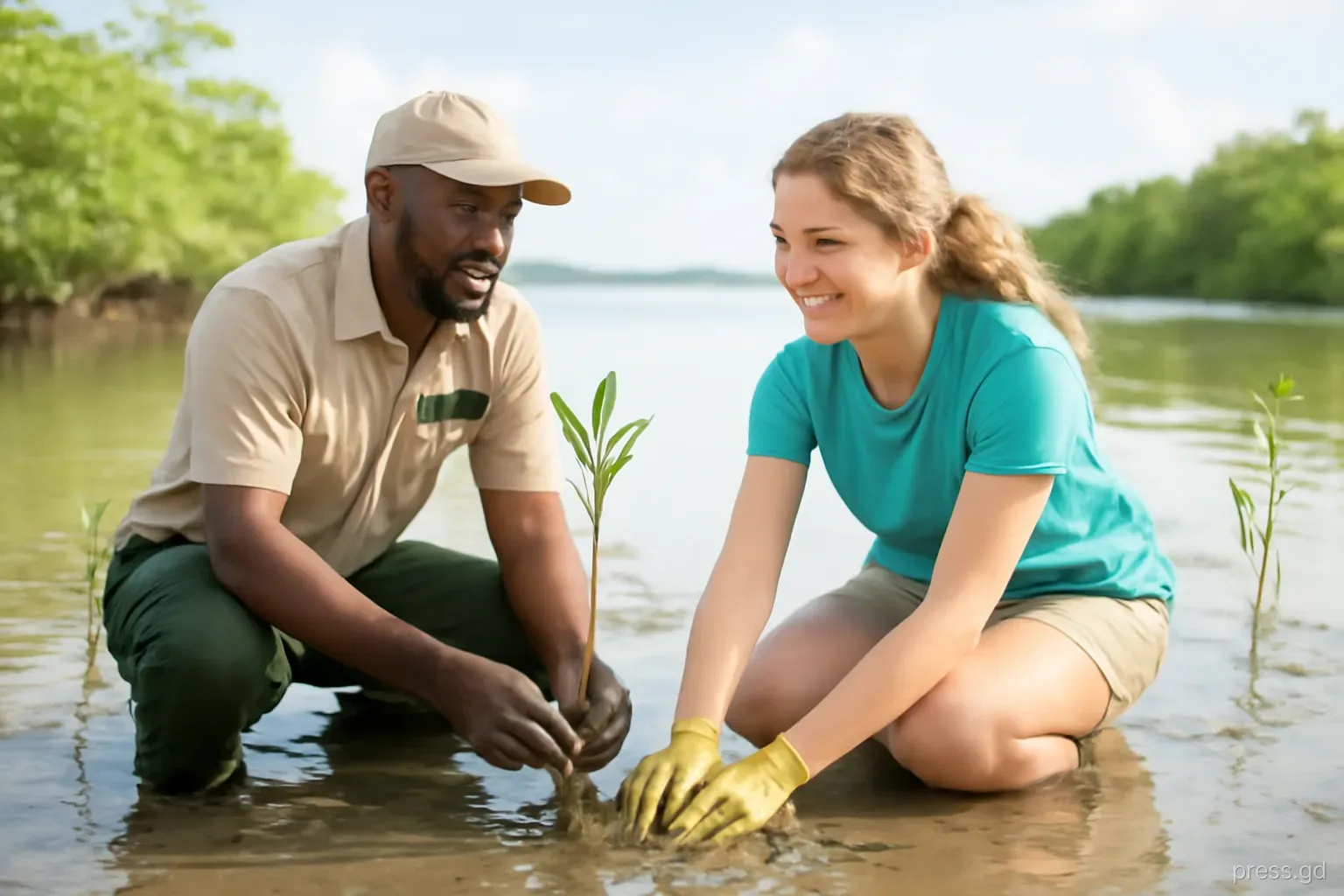
This means a blue economy plan is also, in effect, a climate adaptation plan. Protecting mangroves and seagrass beds keeps carbon stored and shelters coasts from storm surge. Healthy reefs reduce wave energy before it reaches the shore. Planning where to build, and how far back from the high-water mark, decides whether hotels and homes will still be usable in thirty years.
The overlap explains why the same institutions and donors appear in both conversations, and why Grenada's climate commitments and its ocean planning increasingly refer to each other.
Frequently asked questions
Is the blue economy just another name for tourism?
No, although tourism is its largest component in Grenada. The concept covers all ocean-based activity, including fishing, yachting, shipping, research and potential new industries, and adds the condition that the activity must not degrade the marine environment it depends on.
Who is responsible for the blue economy in Grenada?
Responsibility is spread across government. Ministries dealing with the blue economy, fisheries, tourism, the environment and planning all play roles, and the portfolio's name has shifted between governments. Check the current cabinet allocation for the lead ministry.
What is the Blue Growth Coastal Master Plan?
It is a national plan produced in the mid-2010s, described by the World Bank as the first of its kind in the region, that set principles and identified locations for sustainable ocean-based development in Grenada, Carriacou and Petite Martinique.
Does the blue economy include deep-sea mining or oil?
Grenada has explored offshore hydrocarbon potential in the past, and some international definitions are broad. Most sustainability-focused frameworks exclude or heavily restrict extractive activities. Grenada's own planning documents emphasise tourism, fisheries and conservation.
How do marine protected areas fit into the blue economy?
They protect reefs and fish nurseries that support fishing and diving. In Grenada, fees from MPA visitors help pay for management, and the areas are intended to show that conservation and economic activity can coexist.
Why do some groups call it bluewashing?
Critics argue that the label is sometimes applied to large coastal developments that harm reefs, mangroves or community access while presenting themselves as sustainable. They call for stronger impact assessments, public consultation and enforcement.