Under the Paris Agreement, every country must publish a nationally determined contribution, or NDC, setting out how it will cut emissions and adapt to climate change. Grenada's headline commitment is a reduction in greenhouse gas emissions of 40 per cent below 2010 levels by 2030, a target first put forward in 2016 and confirmed in its second NDC at the end of 2020. Alongside it sit a national climate change policy and national adaptation plans covering how the islands will cope with the impacts they cannot avoid.
These documents are dense and rarely read outside government and donor circles, yet they shape which projects get funded, from solar panels on public buildings to drainage upgrades in flood-prone villages. This explainer sets out what the plans say, what conditions are attached, how progress is reported, and how to read the targets with a critical eye.
The emissions target and the conditions behind it
Grenada's emissions are tiny in global terms. They come mainly from burning imported diesel to generate electricity, petrol and diesel in road transport, and methane from waste. The NDC therefore concentrates on energy, transport, waste, forestry and industrial gases. The 40 per cent target applies to economy-wide emissions compared with the 2010 baseline.
Crucially, the target is conditional. Grenada states that achieving it depends on international support in finance, technology and capacity building. This is common among small developing states, which argue that they should not divert scarce public money from health and education to cut emissions they did little to cause. Independent reviewers such as WWF have noted that the 2020 update did not raise the ambition of the earlier target, while the government presented it as the most it could realistically achieve.
The first NDC assumed geothermal electricity would come online to help meet an interim target for 2025. Geothermal exploration has taken place, but the resource remained in an exploratory phase, which shows how much the plan depends on large projects that can be delayed by finance, technical results and negotiations.
Where the cuts are supposed to come from
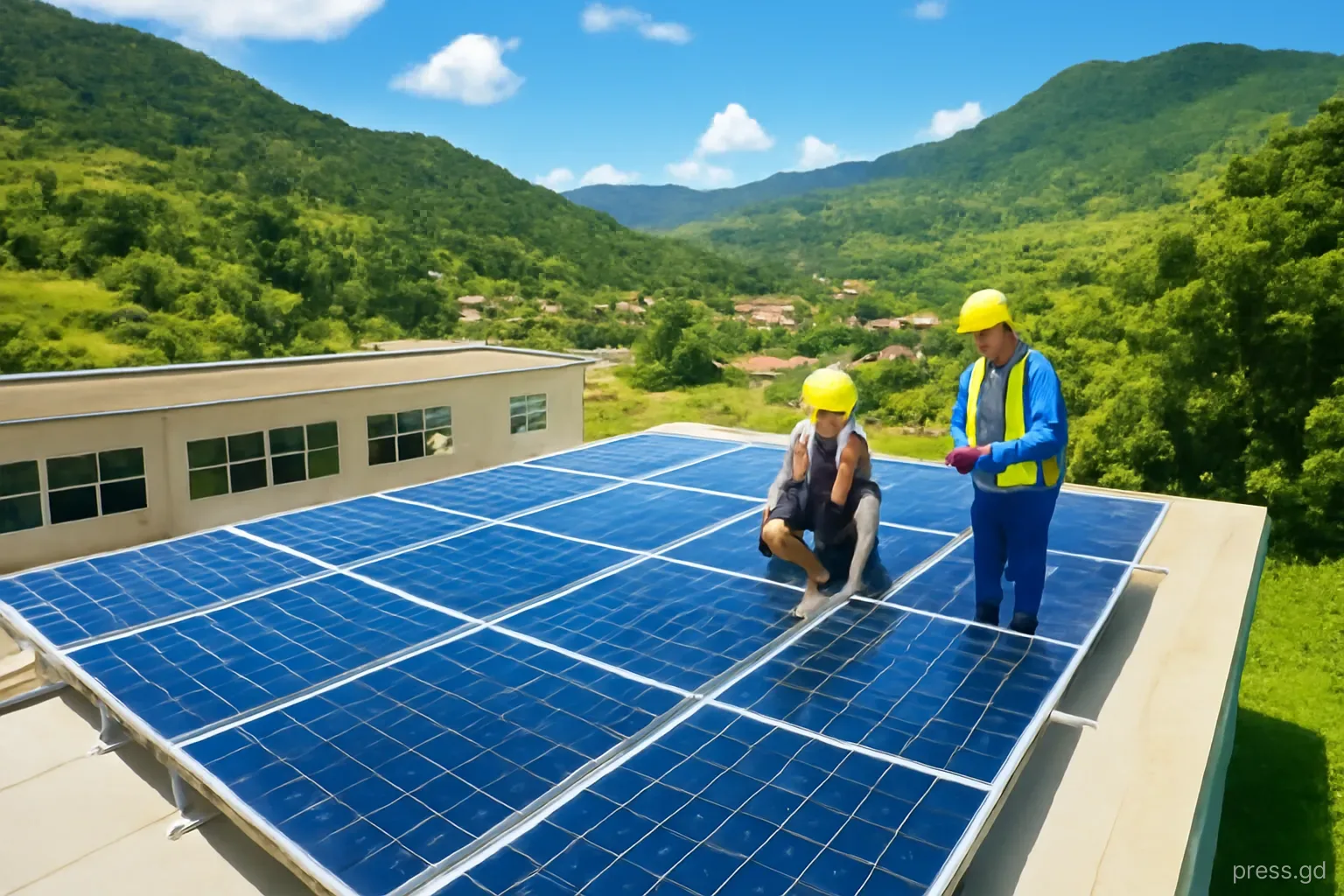
Electricity. Shifting power generation from diesel to solar, wind, possibly geothermal and battery storage is the largest lever. Electricity supply is dominated by Grenlec, and the framework governing generation, licensing and independent producers has been the subject of legal and political debate over the years.
Transport. Grenada's car fleet is almost entirely fuel-based. Options include incentives for electric and hybrid vehicles, better public transport on the minibus network and improved fuel efficiency standards for imports.
Waste. Landfill gas, mainly methane, can be reduced through better landfill management, composting and diversion of organic waste.
Forestry. Protecting and restoring forests keeps carbon stored and protects watersheds. Hurricane damage, as after Ivan and Beryl, can quickly reverse gains.
Efficiency. Efficient lighting, appliances and building design reduce demand, which is often the cheapest way to cut emissions in a small grid.
The adaptation side: policy and plans
For Grenada, adaptation is the more urgent half. The National Climate Change Policy for Grenada, Carriacou and Petite Martinique covering 2017 to 2021 aimed to build resilience at individual, community and national levels. Its priority areas included water supply and sewage, agriculture and food security, biodiversity and ecosystems, human health and coastal zone management.
The National Climate Change Adaptation Plan for the same period translated those priorities into programmes and was described as a living document to be revised regularly. The ministry responsible for climate resilience now lists a National Adaptation Plan for 2025 to 2030 among its official documents, continuing the cycle with updated priorities after the experience of Hurricane Beryl.
Adaptation plans in practice cover things that rarely make headlines: rainwater harvesting at schools and clinics, improved drainage and slope stabilisation, coastal protection and mangrove restoration, climate-smart agriculture, early warning systems, and health measures against heat and vector-borne diseases such as dengue. Much of this is delivered through donor-funded projects, which means the plan doubles as a pitch to funders.
How progress is reported
Climate commitments are only useful if someone checks them. Grenada's reporting works through a sequence of documents:
- National communications to the UNFCCC describe national circumstances, emissions inventories and vulnerability, and are prepared every few years.
- Greenhouse gas inventories estimate emissions by sector, making it possible to compare progress against the 2010 baseline.
- Under the Paris Agreement's enhanced transparency framework, countries submit biennial transparency reports. Grenada has said it will communicate any additional commitments through this channel.
- Countries submit updated NDCs every five years, and each new one is expected to reflect the country's highest possible ambition.
- Domestically, budget statements, annual reports of ministries and project evaluations by donors provide a further record of what has actually been built or changed.
How to read the targets critically
Climate targets are easy to announce and harder to deliver. Useful questions to ask when reading Grenada's plans, or any coverage of them, include:
- Is the target conditional? If so, has the necessary finance been secured, or is it still a request?
- What is the baseline? A cut measured against 2010 depends on how accurately 2010 emissions were estimated, and inventories are sometimes revised.
- Which projects carry the weight? If one large project, such as geothermal power, accounts for much of the cut, delays to it will put the whole target at risk.
- What has been installed, not just planned? Megawatts of solar actually connected to the grid matter more than capacity announced.
- Who is accountable? Check which ministry leads, whether Parliament receives progress reports, and whether reports are published on time.
- How are adaptation results measured? Number of people with reliable water in droughts, or kilometres of protected coastline, say more than amounts spent.
Why the plans matter to ordinary Grenadians
Electricity prices in Grenada are high by international standards because most power is generated from imported fuel, and bills move with world oil prices. A credible shift to renewable energy could reduce exposure to those swings, though the effect on bills depends on how the transition is financed and regulated. Rooftop solar for homes and businesses is part of the picture, subject to rules on connecting to the grid.
On the adaptation side, the plans decide which communities receive drainage works, sea defences or water storage first. Residents of flood-prone villages, farmers facing longer dry seasons and fishers dealing with sargassum all have a stake in how priorities are set. Consultations on new plans are announced by the ministry and in the media, and are an opportunity to raise local concerns.
Finally, the documents are a check on government. A target set in public can be cited back to those who set it, and the five-year NDC cycle offers regular moments to ask what was delivered.
Mistakes in public debate about the targets
Treating the target as a promise already funded. Because the pledge is conditional, a shortfall in international support changes what is achievable. Coverage that reports the 40 per cent figure without the condition gives an incomplete picture.
Confusing capacity with output. A solar farm's rated capacity is not the electricity it produces; output depends on sunlight, storage and how the grid uses it. Progress reports should be read with that in mind.
Ignoring adaptation because it is less visible. A new drainage channel or a rainwater tank at a clinic rarely makes headlines, yet these measures often matter more to Grenadians in the next decade than emissions cuts.
Assuming plans end when their period ends. The 2017 to 2021 documents did not simply expire; their programmes continued and fed into newer plans. Reading them as a sequence shows what was carried forward and what was dropped.
Frequently asked questions
What is Grenada's emissions reduction target?
Grenada's NDC commits to reducing greenhouse gas emissions by 40 per cent below 2010 levels by 2030. The target was first set in 2016, confirmed in the second NDC submitted at the end of 2020, and is conditional on international support.
What does conditional mean in a climate pledge?
It means the country will meet the target only if it receives external finance, technology and technical help. Grenada argues that as a small, highly vulnerable state it cannot fund the transition entirely from its own budget.
Is geothermal energy operating in Grenada?
Geothermal exploration has been carried out, but the resource has remained in an exploratory phase rather than producing electricity. Its development depends on drilling results, financing and agreements, so check current reporting for the latest status.
What is a National Adaptation Plan?
It is a government plan setting out how the country will reduce its vulnerability to climate impacts, sector by sector, and which projects and policies to prioritise. Grenada's first covered 2017 to 2021, and a newer plan covers 2025 to 2030.
Where can the climate plans be read?
Grenada's NDCs and national communications are submitted to the UNFCCC and published in its registries, and the ministry responsible for climate resilience publishes policies, plans and legislation in its document library.
Will the energy transition lower electricity bills?
It may reduce exposure to volatile oil prices over time, but the effect on bills depends on investment costs, regulation and how the grid is managed. Rooftop solar can lower costs for individual customers, subject to connection rules and up-front expense.