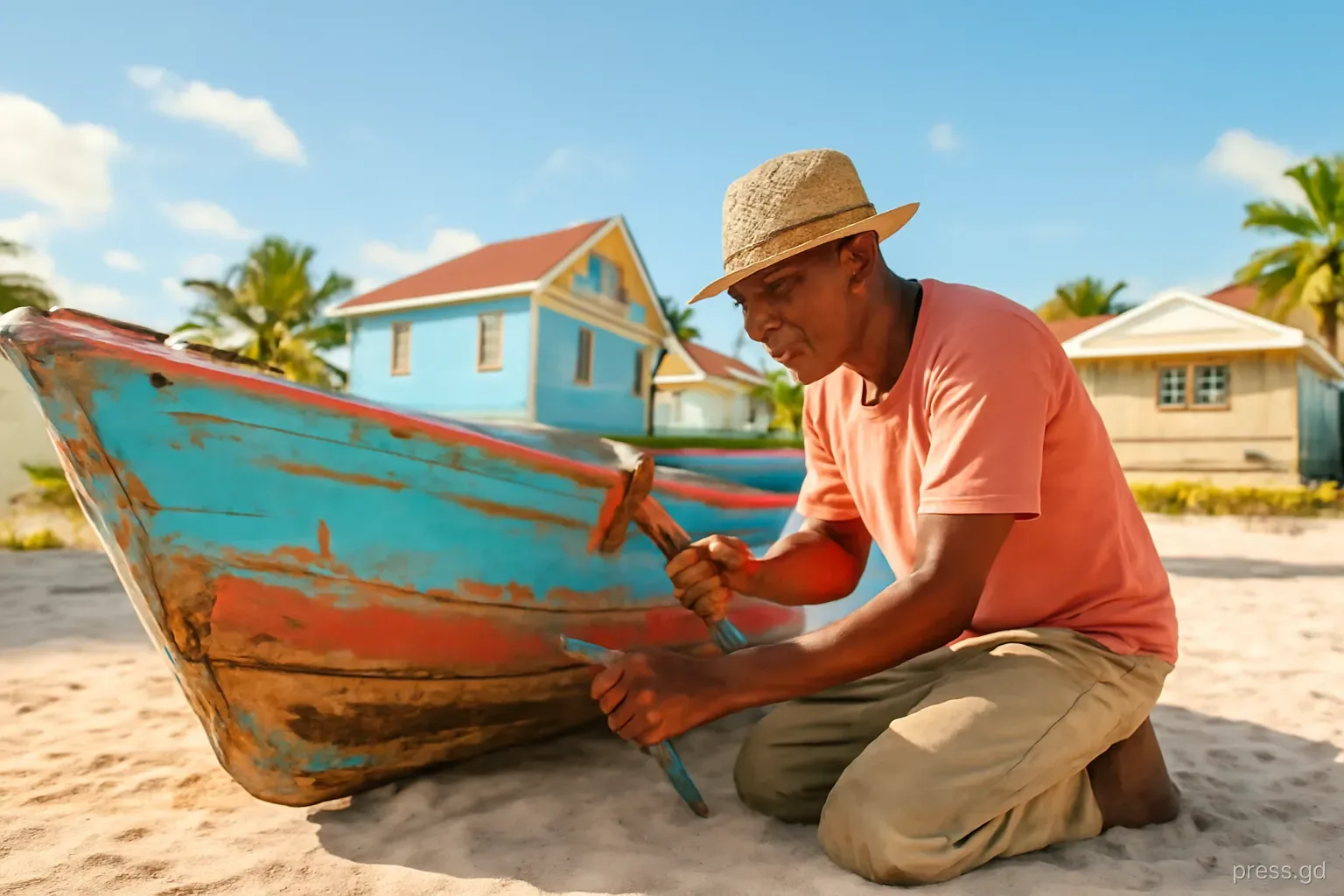
When Hurricane Beryl tore across Carriacou and Petite Martinique in July 2024, it destroyed homes, schools, the main clinic's facilities, boats and fishing gear, and stripped the islands' vegetation. No sea wall or building code could have prevented all of that. Climate negotiators have a name for this category of harm: loss and damage, the consequences of climate change that go beyond what adaptation can avoid.
For years, rich countries resisted any fund dedicated to it, worried that it implied legal liability. That changed at COP27 in Egypt in 2022, when governments agreed to create one, and the fund began taking requests for its first grants in 2025. This explainer sets out what loss and damage means, how the fund is designed, why it remains contested, and what Grenada could realistically expect from it.
Mitigation, adaptation, loss and damage: three different jobs
Climate policy is usually split into three parts. Mitigation means reducing greenhouse gas emissions, the cause of the problem. Adaptation means preparing for the effects that can no longer be avoided: building higher roads, protecting water supplies, planting drought-tolerant crops. Loss and damage covers what remains after both: the storm that still flattens a village, the beach that disappears, the reef that dies despite protection.
Loss and damage itself comes in two forms. Economic losses can be counted in money: houses, roads, crops, tourism revenue, fishing boats. Non-economic losses are harder to measure: graves washed away, cultural sites lost, a community scattered when people emigrate after a disaster, the mental toll on children whose school vanished overnight. Small island negotiators insisted that both kinds be recognised.
The distinction matters for money. Adaptation finance funds projects planned in advance. Loss and damage finance has to move after an event, often quickly, and may need to support things that are not projects in the usual sense, such as cash for affected households or rebuilding livelihoods.
How the fund came to exist
The idea has a long history in island diplomacy. The main milestones are:
- In the early 1990s, Vanuatu, on behalf of small island states, proposed an insurance mechanism for sea level rise during negotiations for the original UN climate convention. It was not adopted.
- In 2013 the Warsaw International Mechanism on loss and damage was set up to promote understanding and coordination, but without its own money.
- The Paris Agreement in 2015 included a separate article on loss and damage, with accompanying language stating that it does not involve or provide a basis for liability or compensation, a condition demanded by major emitters.
- At COP27 in Sharm el-Sheikh in 2022, countries agreed to establish new funding arrangements, including a dedicated fund, after a long push by developing countries.
- At COP28 in Dubai in 2023 the fund was formally operationalised, with first pledges announced on the opening day. It is now known as the Fund for responding to Loss and Damage, often shortened to FRLD.
- In 2025 its board launched an initial grant programme, the Barbados Implementation Modalities, named after the island where the design was agreed. COP30 in Belém welcomed it later that year.
How the first grants are meant to work
The Barbados Implementation Modalities are a pilot. Around US$250 million was set aside for 2025 and 2026 to test how the fund will operate, which is a small sum compared with the damage of a single major hurricane. The point of the pilot is to learn how money can reach governments and communities quickly, which channels work, and how to keep the process simple enough for small administrations.
Developing countries submit funding requests, generally through government focal points, and the fund's management assesses them against agreed criteria. Small island states and least developed countries are meant to receive particular consideration, including a minimum share of resources, though the exact allocation rules continue to evolve through board decisions.
Speed is the central design challenge. Disaster-hit governments need cash within weeks, not years. The board's work plan for 2026 includes rapid disbursement options and a small grants policy, which would matter a great deal to a country like Grenada, where a request for tens of millions of dollars after a hurricane can be large relative to the national budget.
Why the fund is still contested
Size. Pledges so far amount to hundreds of millions of US dollars, while estimates of loss and damage in developing countries run into the hundreds of billions each year. The gap is the main source of frustration.
Who pays. Contributions are voluntary. Developed countries are urged to lead, but some argue that large emerging economies with high emissions should contribute too, a dispute that has slowed progress on all climate finance.
Liability. Major emitters accepted the fund on the understanding that it implies no legal responsibility. Many island advocates still frame it as a matter of justice, and the two views coexist uneasily.
Overlap. Disaster response already involves humanitarian agencies, development banks and regional insurance. The fund must fill gaps rather than duplicate them.
Access. If application procedures mirror those of older climate funds, small states with thin civil services may struggle to compete with larger countries that have specialist units.
What it could mean for Grenada
Grenada already uses several tools to absorb disasters: parametric insurance through the Caribbean Catastrophe Risk Insurance Facility, hurricane clauses in some debt agreements that allow repayments to be paused, and support from development banks and donors. Beryl showed both the value and the limits of these tools. Insurance paid quickly, but the payouts covered only part of the losses, and debt deferral postpones obligations rather than cancelling them.
A functioning loss and damage fund could add grant money, which does not need to be repaid, for the kinds of needs that other instruments handle poorly: livelihoods of fishers and small farmers, temporary housing, mental health support, and the slow work of restoring community life on islands where many residents left after the storm.
Realistically, the sums available in the pilot phase are modest, and Grenada will compete with many other vulnerable countries. The fund is best understood as a new layer that may grow over time, not as a solution to the cost of the next major hurricane. Much depends on whether future pledges rise and whether the board succeeds in making access fast and simple.
What to watch in the coming years
For readers following the issue in Grenada and the wider Caribbean, these signals will show whether the fund is becoming useful:
- Whether total pledges grow substantially beyond the initial commitments, and whether pledged money is actually paid in.
- The first approved requests from small island states, and how long they took from application to disbursement.
- Whether a rapid-response window is created that can release money within weeks of a qualifying disaster.
- How the fund coordinates with CCRIF, development banks and humanitarian agencies so that money arrives in the right order.
- Whether non-economic losses such as cultural heritage and displacement receive any dedicated support.
- How Grenada's own government organises its requests, including consultation with communities on Carriacou and Petite Martinique.
- Whether reporting on approved grants is published in a way that lets citizens and journalists follow the money from pledge to project on the ground.
Loss and damage beyond hurricanes
Public discussion in Grenada focuses on storms, because they are sudden and visible. The negotiations, however, also cover slow-onset events that build up over years: sea level rise eating into coastal land, saltwater reaching wells and farmland, warmer seas killing coral, and changing rainfall that makes droughts longer or downpours heavier.
These losses are harder to fund because there is no single date of disaster and no obvious trigger for a payout. A beach that narrows a little each year, or a fishing ground that slowly yields less, does not produce headlines, yet over decades the losses can be as large as a hurricane's.
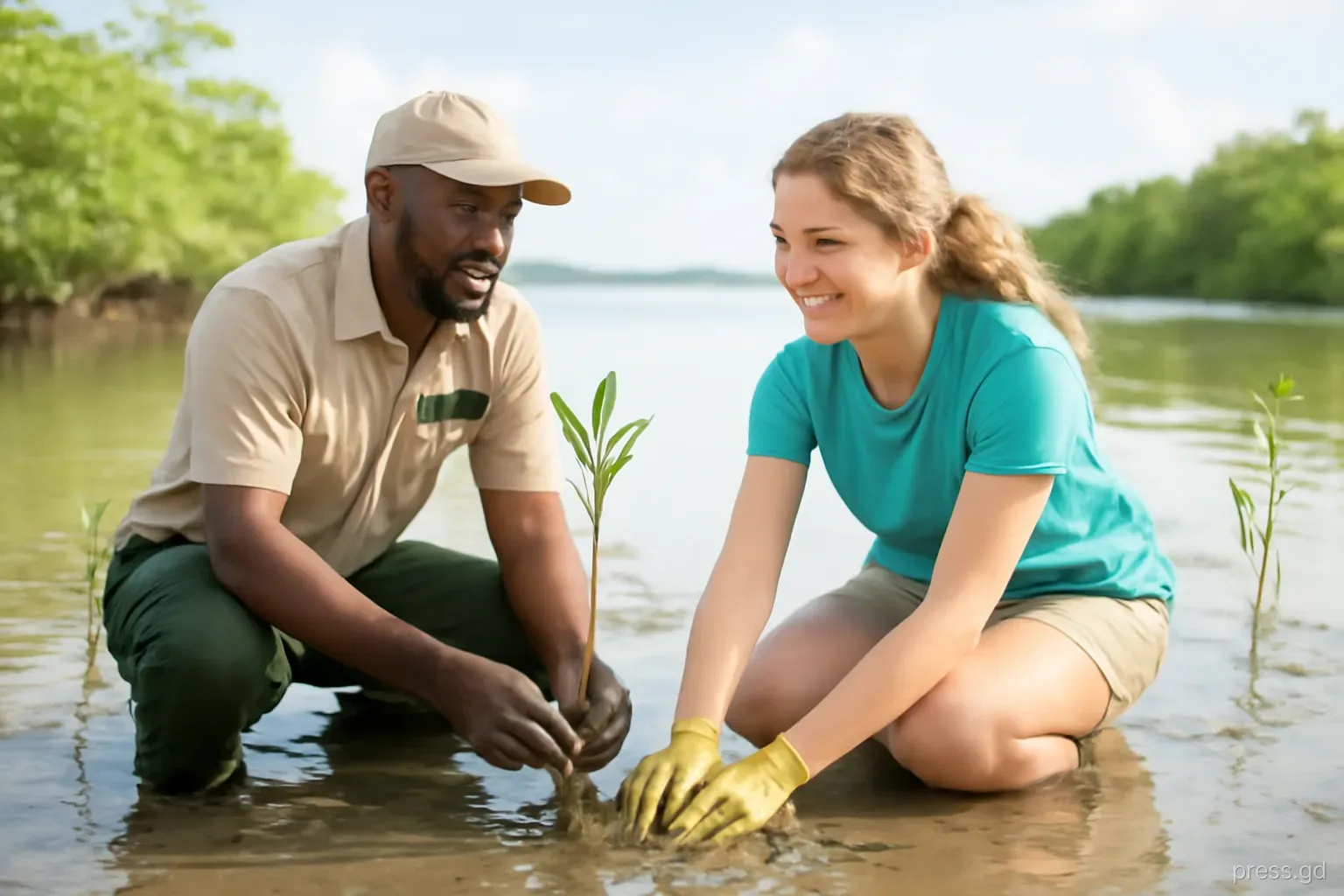
For Grenada, slow-onset impacts touch coastal villages on the east and south coasts, low-lying parts of Carriacou and the reef systems that protect them. How the fund treats such losses, and whether it can support planned relocation or the restoration of natural defences such as mangroves, is one of the open questions its board will have to answer.
Frequently asked questions
Is the loss and damage fund the same as compensation?
Not legally. The Paris Agreement decision states that loss and damage provisions do not create a basis for liability or compensation. Many advocates describe it as climate justice, but contributions are voluntary rather than payments ordered for harm caused.
Did Grenada receive loss and damage money after Hurricane Beryl?
Recovery after Beryl relied mainly on CCRIF insurance payouts, deferred debt repayments under hurricane clauses, donor support and loans. The fund's first grant programme only opened in 2025, so it was not a source of immediate post-Beryl money.
Who manages the Fund for responding to Loss and Damage?
It has its own board with members from developed and developing countries, and a secretariat led by an executive director. The board sets the rules for who can apply, how money is allocated and how quickly it moves.
How is loss and damage different from disaster relief?
Humanitarian relief responds to immediate needs like food, water and shelter, regardless of cause. Loss and damage finance is tied to climate change and is intended to cover longer-term recovery and slow-onset harms such as sea level rise as well.
Can individuals in Grenada apply to the fund?
No. Requests go through national governments and approved channels, not individual households or businesses. Any benefit for families would come through government or partner programmes funded by a grant, so watch for announcements from the relevant ministries.
Why is the first programme named after Barbados?
The initial set of operating rules was agreed at a board meeting held in Barbados in 2025, and fund documents named it the Barbados Implementation Modalities. Barbados has been an active voice on climate finance reform.