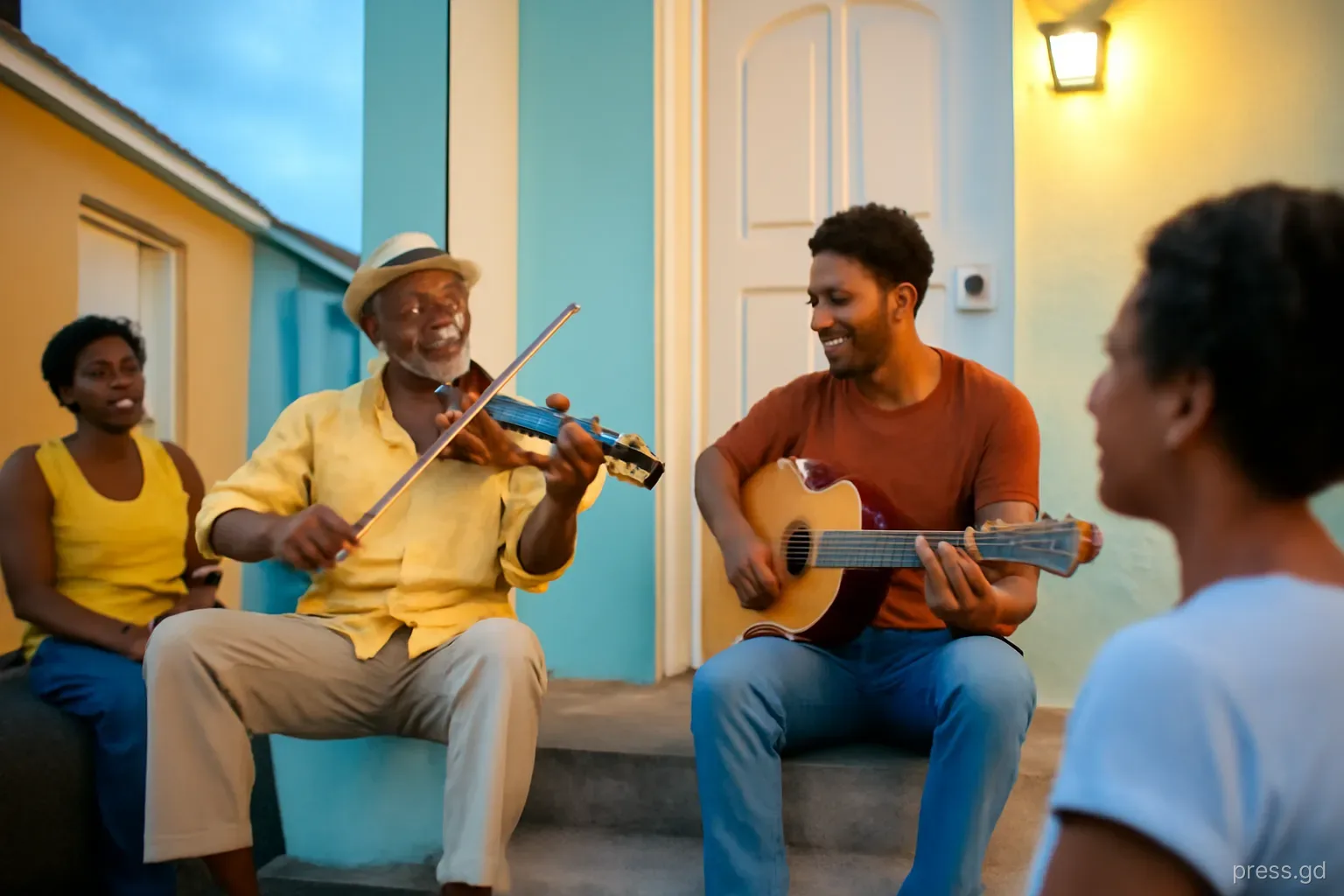

Every August, in the fortnight before Spicemas reaches the road, a small number of singers in jackets and hats stand on stage and say things about Grenada that would get a newspaper columnist a solicitor's letter. They name no names, or almost none. They do not need to. The audience knows exactly which minister, which contract and which broken promise each verse is about, and the laughter comes a half-second before the punchline.
That is calypso, or kaiso as its devotees prefer, and in Grenada it has survived the arrival of soca, dancehall and streaming playlists because it does something the faster music does not attempt: it argues. This explainer sets out how the art form works on the island, what the competition structure rewards, who has dominated it, and why it remains worth paying attention to even if your carnival is mostly about the road.
What makes a song a calypso rather than a soca tune
The distinction matters to Grenadians and is often blurred by visitors. Soca, which grew out of calypso in the 1970s, is built for movement: the lyrics are short, repetitive and full of instructions to wave, jump or wine. Calypso is built for listening. A classic kaiso has verses that develop an argument or tell a story, a chorus that lands the point, and a tempo slow enough that every syllable can be heard over the band.
The subject matter is the other giveaway. Calypso deals in current affairs, scandal, social behaviour, migration, the cost of living, crime, relations between the sexes and the island's place in the world. Humour is the main tool, often through double meaning, and the best writers can make a song about water outages or a stalled road project sound like a courtroom summation. A calypsonian is expected to have a sobriquet, a stage name with some swagger to it, and to deliver in character.
Because the form is old, it carries conventions that regular listeners enjoy spotting: the opening verse that sets the scene, the turn in the third verse, the final verse that twists the knife. A song that breaks those conventions cleverly earns respect; one that ignores them tends to sound like soca that forgot to speed up.
How the competition season works
Tents come first. In the weeks before carnival, calypsonians perform in tents, which are less canvas than collective shows: a group of singers sharing a resident band and a stage, presenting their new songs night after night. This is where songs are tested and where judges and fans form early opinions.
Then the elimination rounds. The Spicemas calendar includes preliminary and semi-final rounds from which a small field of finalists emerges. Each finalist typically presents two songs, and judges score lyrics, melody, rendition, presentation and, in practice, how well the song connects with the moment.
The final is a national event. The Calypso Monarch final falls in the carnival week itself, alongside the Soca and Groovy Monarch contests and the Panorama steelband competition. The exact night has moved over the years, so check the Spicemas Corporation's published schedule for the current year.
Winning changes careers. The title brings prize money, bookings and, more importantly, credibility. A Calypso Monarch is expected to have a view on national life and is often asked for it long after August.
The singers who shaped the modern form
The dominant figure of modern Grenadian calypso is Ajamu (Edson Mitchell), who holds the record for Calypso Monarch titles: nine wins between 1987 and 2015, spread across almost three decades. That span is the point. Holding the crown in 1987 and again in 2014 and 2015 means writing convincingly for audiences who grew up under the revolution, through the 1980s reconstruction and into the social media age.
Black Wizard is the other name that comes up in any conversation about range. He won the first National Soca Monarch in 1994, and Grenadian commentators have noted that he and Ajamu are the only artistes to have taken the Calypso and Soca Monarch titles in the same year, a double that requires two very different skill sets in a single season.
Grenada also lays claim, by birth, to the most famous calypsonian of all. Slinger Francisco, the Mighty Sparrow, was born in Grand Roy in St John in 1935 and moved to Trinidad as a small child; his career belongs largely to Trinidad, but his Grenadian origins are a point of pride on the island and a reminder of how intertwined the two calypso traditions have always been.
Why politicians pay attention
Calypso in the Eastern Caribbean has always had an oppositional streak. It grew out of a culture in which the powerful were mocked in song because they could not easily be challenged in other ways, and that habit has outlasted the colonial era. In Grenada, a well-written kaiso about a government decision can circulate for months, quoted in rum shops, on call-in radio and in WhatsApp voice notes, long after the competition is forgotten.
That gives the form a peculiar civic role. A sharp calypso can put an issue on the national agenda faster than a press release, and politicians of all parties have learned that being the subject of a popular song is not something to laugh off. Some songs age into historical documents: listening to calypsos from the late 1970s, the revolutionary period and the years after 1983 gives a sense of how ordinary Grenadians talked about events, which formal records rarely capture.
None of this means calypsonians are neutral. Many are openly partisan, and audiences read songs through their own loyalties. Part of the pleasure is the argument afterwards about whether a verse was fair.
There is also a long-running debate about the limits. Calypsonians walk a line between satire and defamation, and the best of them stay on the right side by working through implication, character and metaphor rather than direct accusation. Listeners treat that craft as part of the judging, whether or not the official score sheet says so.
Common misunderstandings about calypso
Newcomers to Grenadian carnival tend to make the same few mistakes when they first encounter the art form.
- Treating it as background music. Calypso is lyric-led. If you talk through the verses, you miss the content that the rest of the room is reacting to.
- Assuming it is old people's music. Younger calypsonians compete every year, and junior calypso competitions in schools keep the form alive in the next generation.
- Missing the local references. Many lines depend on knowing a recent news story, a nickname or a parish rivalry. Reading the local press in July makes the August songs far funnier.
- Taking every insult literally. Picong, the art of witty mockery, is part of the tradition. A singer who roasts a rival is often performing a rivalry rather than declaring war.
- Expecting Trinidad's scene in miniature. The forms are related, but Grenadian calypso has its own concerns, accents and humour rooted in island life.
How to listen like a local
The best entry point is the tent season. Shows are cheaper and more relaxed than the finals, and you hear a full range of songs, including the ones that will not make the cut but contain the sharpest lines. Arrive with a sense of what has been in the news over the previous year; even a skim of local headlines from the past few months will help you decode the verses.
Local radio stations play the season's calypsos heavily in July and August, and many artists post their songs online, so you can learn the choruses before the final. On the night itself, watch the audience as much as the stage. The moments when the crowd goes quiet and then erupts usually mark the lines everyone will be repeating the next morning.
Finally, accept that some references will escape you. Calypso is written first for Grenadians, and its insider quality is part of what keeps it honest. Asking someone beside you to explain a verse is perfectly acceptable, and it is often the start of a long conversation about the state of the nation.
Frequently asked questions
What is the difference between calypso and kaiso?
They refer to the same art form. Kaiso is the older term, preferred by many performers and enthusiasts because it signals the traditional, lyric-driven style rather than the faster party music that grew out of it. In everyday Grenadian speech the two words are used interchangeably.
Who has won the most Grenada Calypso Monarch titles?
Ajamu (Edson Mitchell) holds the record with nine titles, won between 1987 and 2015. His wins span the late revolutionary aftermath through to the 2010s, which makes him the reference point for longevity in Grenadian calypso.
When is the Calypso Monarch final held?
It takes place during Spicemas week in August, close to Carnival Monday and Tuesday, alongside the other music competitions. The exact night and venue are set each year by the Spicemas Corporation, so confirm the current schedule before planning around it.
Was the Mighty Sparrow Grenadian?
Yes, by birth. Slinger Francisco was born in Grand Roy, St John, in July 1935 and moved to Trinidad with his parents as a toddler. He built his career in Trinidad and became the best-known calypsonian in the world, but Grenada counts him as a son of the soil.
Do you need to understand Grenadian politics to enjoy calypso?
Not to enjoy the melody and the performance, but the lyrics land much harder if you know the context. Skimming local news for a few weeks before carnival, or asking a neighbour in the crowd, will open up most of the jokes and references.