
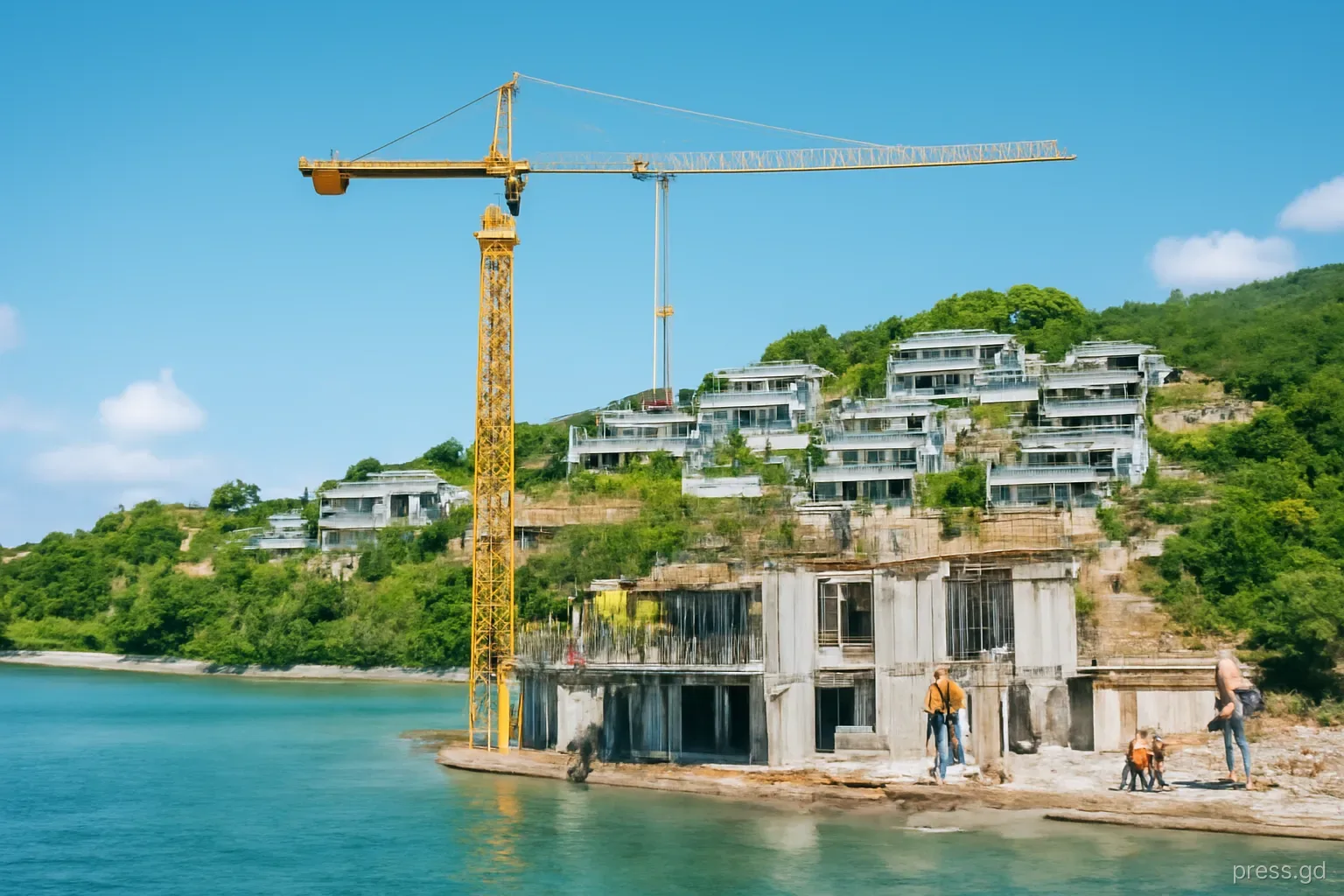
Most debate about Grenada's citizenship by investment programme focuses on the applicants: who they are, how they are vetted and what a Grenadian passport gives them. Far less attention goes to the other side of the transaction, which is what the money does once it arrives. For a state with a small tax base, CBI contributions have become one of the largest sources of non-tax revenue in some years, and the real estate route has financed several of the island's newest hotels.
That makes the programme an economic question as much as an immigration one. This explainer sets out how CBI money enters the economy, why economists describe it as a windfall rather than a stable income, and what pressures from abroad could change it. It does not cover how to apply; for that, the Investment Migration Agency and licensed local agents are the official channels.
A programme with two lives
Grenada first offered economic citizenship in the late 1990s. That programme was suspended in 2001 amid international concern about security and due diligence, a reflection of the climate after the September 11 attacks. For more than a decade the country had no such scheme.
The Citizenship by Investment Act of 2013 relaunched it under a new framework, at a time when the government was in default and searching for revenue and investment. Administration passed through the Citizenship by Investment Unit and later the Investment Migration Agency, with applications lodged only through authorised local agents. In recent years Grenada, together with other Eastern Caribbean states that run similar programmes, has agreed to common minimum standards and a regional regulator, the Eastern Caribbean Citizenship by Investment Regulatory Authority.
The programme's attraction for applicants includes visa-free or visa-on-arrival travel to many countries and, unusually in the region, Grenada's treaty status that allows its citizens to apply for the United States E-2 investor visa. Those features are also what make it sensitive to decisions taken by foreign governments.
Two routes, two economic channels
The donation route. Applicants contribute a set amount to the National Transformation Fund, a government fund created to receive these payments. The money becomes public revenue that can be spent on projects or used to strengthen the budget. Government processing and due diligence fees add a further, smaller stream.
The real estate route. Applicants buy shares or units in government-approved developments, usually hotels or resorts, and must hold the investment for a minimum period. The money flows to private developers rather than to the treasury, financing construction. Kimpton Kawana Bay at Grand Anse is one widely cited example of a project funded this way.
Spin-off spending. Both routes generate fees for local agents, lawyers, banks and due diligence providers, and the construction phase of real estate projects supports jobs and demand for materials.
Taxes along the way. Real estate projects pay duties and taxes, though often with concessions, and once operating they contribute VAT and employment. Whether concessions outweigh eventual revenue is a common debate.
Why economists call it a windfall
CBI receipts are large but unpredictable. They depend on demand from applicants in particular countries, on competition from other programmes in the region and beyond, on processing times, and on the travel benefits a passport offers at any given moment. A rule change by a single foreign government can cut applications sharply within months.
The International Monetary Fund and the Eastern Caribbean Central Bank have repeatedly advised CBI countries to treat these inflows as temporary. The standard recommendation is to avoid funding permanent spending, such as public sector salaries, from CBI money, and instead to use it for one-off investment, debt reduction or savings in a buffer fund that can be drawn on after disasters. Grenada's fiscal rules and its National Transformation Fund structure are partly designed with this in mind.
In practice, the temptation to spend windfalls is strong for any government facing urgent needs. Critics have questioned how transparently fund money is reported and allocated, while governments point to housing, infrastructure and social programmes it has supported. Regular publication of fund accounts, showing receipts, allocations and balances, is the best way to settle such arguments, and parliamentary questions on the fund are a recurring feature of budget debates.
Effects on property, construction and prices
The real estate route has a visible footprint along the south and south-west coasts, where approved resort projects have been built or announced. During construction they employ local and foreign workers and buy from suppliers, which adds to growth figures. Once completed, they can add to hotel room stock and tourism earnings, provided they attract guests and are well run.
There are concerns too. Some approved projects have taken years to progress, raising questions about whether investor money is matched by actual building. Units sold at prices set for CBI buyers may not reflect the underlying commercial value of a hotel, which matters if investors later try to sell. And large inflows into one corner of the economy can push up construction costs and land prices for local buyers.
The regional regulator and minimum pricing agreements among Eastern Caribbean states aim to reduce price undercutting between countries, which had led to discounting that worried both investors and foreign governments.
How CBI shows up in national statistics
CBI money appears in several places in the economic data, which is one reason figures quoted in public debate rarely match. Donations to the National Transformation Fund and government fees are recorded as non-tax revenue in the public accounts. Real estate investment appears as foreign direct investment in the balance of payments and as construction activity in GDP. Fees paid to agents and service providers count as income for local businesses.
In strong years these inflows have been large enough to swing the fiscal balance noticeably, which flatters headline surpluses. Analysts therefore often look at the budget balance excluding CBI receipts to judge whether underlying finances are sound. The same logic applies to the balance of payments: a current account deficit that is comfortably financed by CBI-driven investment can become a problem quickly if that investment dries up.
External pressures that could change everything
Because a citizenship programme trades on travel access, decisions taken abroad can affect Grenada's revenue more than anything done at home.
- European Union visa policy. The EU has signalled concern about countries selling citizenship to people who then gain visa-free access to the Schengen area, and has strengthened its ability to suspend visa waivers.
- United Kingdom decisions. The UK has imposed visa requirements on some countries with CBI programmes in the past, citing security concerns, which shows how quickly access can change.
- United States scrutiny. Interest from US authorities in how CBI passports are used, including for E-2 visas, puts pressure on due diligence standards.
- Banking and reputation. Correspondent banks weigh the reputational risks of jurisdictions with CBI programmes, which can affect the cost of financial services for everyone in the country.
- Competition. Several Caribbean states offer similar programmes, and others around the world compete for the same applicants, limiting how much any one country can charge.
Questions worth asking about CBI claims
How much went to the treasury? Headline figures sometimes combine donations, real estate investment and fees. Only part of that is government revenue; the rest is private investment.
What was it spent on? Funding a one-off school or seawall is very different from covering recurring costs. Check fund reports and budget documents.
Is the project actually built? For real estate developments, compare promised completion dates with progress on the ground. A project that has sold many investor shares but shows little construction deserves scrutiny.
Who verifies the numbers? Look for figures in official budget documents, audited accounts, Eastern Caribbean Central Bank reports or IMF assessments rather than in marketing material from agents and developers, which naturally emphasise the most favourable totals.
Frequently asked questions
How does CBI money reach Grenada's government?
Under the donation route, applicants pay into the National Transformation Fund, which counts as public revenue. Government fees for processing and due diligence add more. Under the real estate route, the investment goes to a private developer, so only taxes and fees reach the treasury directly.
Why is CBI revenue considered risky?
It depends on applicant demand, competition and the travel access a passport offers, all of which can change suddenly. A foreign government imposing visas, or a rival programme cutting prices, can reduce inflows within months, so economists advise against using it for permanent spending.
When did Grenada's current CBI programme start?
The current programme was established by the Citizenship by Investment Act of 2013. An earlier economic citizenship scheme from the late 1990s had been suspended in 2001 because of international concerns about security and due diligence.
What is the National Transformation Fund?
It is the government fund that receives donation-route contributions from CBI applicants. The money is intended for national development, such as infrastructure, housing and social programmes, and for strengthening public finances. Reporting on its allocation is a recurring subject of public debate.
Which hotels were built with CBI money?
Several resorts in Grenada have been financed partly through the real estate route, Kimpton Kawana Bay at Grand Anse being a frequently cited example. The list of approved projects changes, and the Investment Migration Agency is the authoritative source for which developments are currently approved.