Long before Grenada had a prime minister, a flag of its own or even an elected majority in its legislature, a young editor in St George's was arguing in print that the people of the West Indies should govern themselves, and govern themselves together. Theophilus Albert Marryshow spent more than four decades making that case, in his newspaper, in the colonial legislature and in visits to London, and he lived just long enough to see a West Indies Federation come into being.
He died within months of its inauguration, and the Federation itself collapsed four years later. Yet Marryshow remains one of the most honoured figures in Grenada: a college bears his name, his house is a cultural landmark and he is remembered across the region as the Father of Federation. This profile sets out the documented facts of his life, what he argued for and why his legacy endures.
Early life and the making of a journalist
Marryshow was born in Grenada on 7 November 1887. Details of his childhood are thinner than for later figures, but accounts agree that he entered journalism young, learning the trade in the island's small but lively newspaper world at the start of the twentieth century.
Newspapers in the British Caribbean of that era were not neutral observers. They were the main forum for political argument in colonies where most people could not vote and where the Crown, through an appointed governor, held decisive power. A capable writer with access to a printing press could shape opinion far beyond his formal status, and Marryshow quickly showed he was one.
His views were formed by the realities of crown colony government, under which Grenada had been ruled directly from London with a largely nominated legislature since the late nineteenth century. Like other educated West Indians of his generation, he saw that system as an insult to people capable of running their own affairs, and he believed that small islands acting alone would never have the weight to change it.
The West Indian and its message
In 1915, Marryshow and C.F.P. Renwick founded The West Indian, a newspaper that became the main vehicle for his ideas. Its outlook was summed up in the slogan associated with it: the West Indies must be West Indian. The phrase captured two arguments at once. The first was that the islands should be governed by and for their own people rather than by distant officials. The second was that their peoples shared a common identity that should be expressed in political union.
Under Marryshow's editorship the paper argued for elected representation, for the rights of working people and for closer links among the British Caribbean territories. Sources differ on exactly when his editorship ended, with some placing it in the mid-1920s and others a decade later, but there is no dispute that the paper was the platform that made his name across the region.
The paper also connected Grenada to wider currents of thought: debates about race and empire, the experience of West Indian soldiers in the 1914–18 war and growing demands for reform across the colonial world. Reading it today would give a vivid picture of how a generation of Caribbean thinkers imagined their future.
The campaign for representative government
Organising for reform. In the years after the 1914–18 war, Marryshow was among the leading figures pressing for representative government in Grenada, working with others to organise petitions and public pressure for elected seats in the legislature.
Taking the case to London. He travelled to Britain to lobby the Colonial Office directly, part of a wider regional campaign that led to the Wood Commission's visit to the Caribbean in the early 1920s.
A partial victory. Constitutional changes in the mid-1920s introduced a limited number of elected members to Grenada's Legislative Council. Voting remained restricted by property and income, so most Grenadians still had no vote, but the principle of election had been established.
A long legislative career. Marryshow won election to the Legislative Council and served as a member for more than three decades, using the chamber to keep pressing for wider reform and regional cooperation.
Regional networks. He worked with reformers and labour leaders across the British Caribbean, attending conferences and building the personal relationships on which the federal idea depended.
Federation at last, and its aftermath
The West Indies Federation was inaugurated in 1958, bringing ten British Caribbean territories, including Grenada, into a single federal state with a parliament in Port of Spain. For Marryshow it was the culmination of a life's work. He was appointed to the federal Senate, the upper house of the new parliament, as one of Grenada's representatives. Sources describe his service there as lasting only a few months.
He died on 19 October 1958, aged seventy. He did not live to see the Federation's troubles: disputes over finance, freedom of movement and the balance of power between larger and smaller members, culminating in Jamaica's referendum vote to leave in 1961 and Trinidad and Tobago's departure soon after. The Federation was dissolved in 1962.
Its failure might have diminished Marryshow's reputation. Instead, later regional projects, from the Caribbean Free Trade Association to CARICOM and the Organisation of Eastern Caribbean States, have tended to cast him as a prophet whose central insight, that small states are stronger together, outlived the particular arrangement that failed.
How Grenada remembers him
Marryshow's name is woven into Grenadian public life in ways a visitor may notice without realising their significance.
- T.A. Marryshow Community College. Grenada's main public tertiary college, known as TAMCC, carries his name.
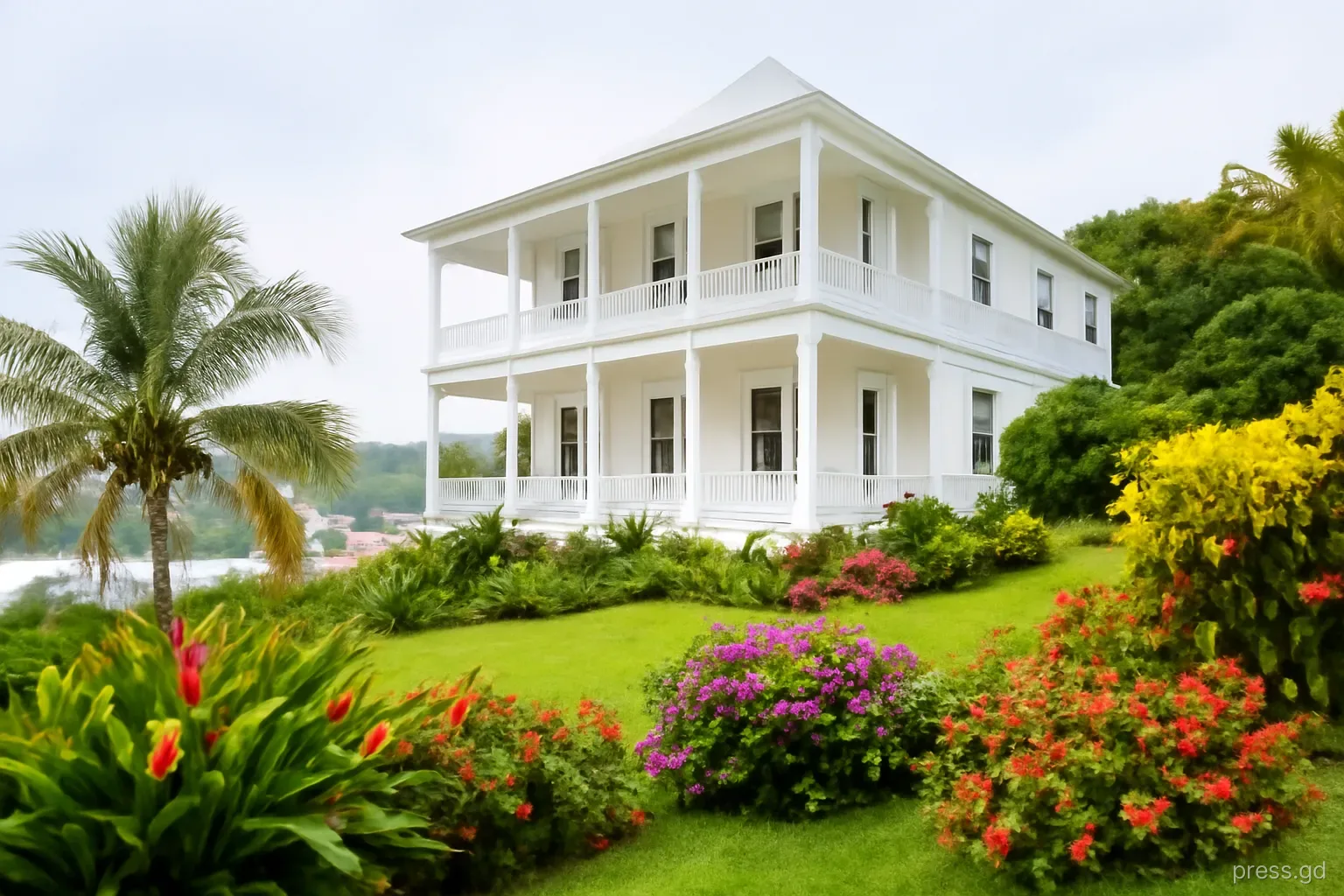
- Marryshow House. His former home in St George's has served as a cultural and educational venue linked to the University of the West Indies' presence in Grenada.
- Regional honours. He is widely referred to across the Caribbean as the Father of Federation, and his name is invoked whenever regional integration is debated.
- School curricula. Grenadian students learn about him as a pioneer of self-government, alongside later figures of the independence era.
- A shared date. He died on 19 October, the same date on which Maurice Bishop was killed in 1983, a coincidence often noted in Grenadian commemorations of that day.
Common misconceptions about Marryshow
Because he is honoured so widely, Marryshow is sometimes remembered in a simplified way. He was not, for example, a revolutionary in the later Grenadian sense. His methods were constitutional: journalism, petitions, elections and lobbying within the imperial system. He sought change through the institutions available to him, and his successes came incrementally.
Nor was he the only architect of federation. The federal idea had many advocates across the region over decades, and the Federation that emerged in 1958 was shaped by politicians from larger territories, by British policy and by compromises he did not control. His distinction lies in the consistency and duration of his advocacy, and in the way he made the idea popular rather than merely administrative.
Finally, he should not be confused with the later mass movements of the 1950s. The enfranchisement of all adult Grenadians in 1951 and the labour upheavals led by Eric Gairy belong to a different, more confrontational political era, one that in some ways overtook the gradualism Marryshow represented.
Marryshow's ideas and the modern Caribbean
The West Indies Federation failed, but almost every regional institution Grenadians deal with today reflects some part of the argument Marryshow made. Grenada belongs to CARICOM, the Caribbean Community, which coordinates trade and foreign policy among its members, and to the Organisation of Eastern Caribbean States, a tighter grouping of smaller islands that shares a currency, a central bank and a supreme court.
The Eastern Caribbean dollar, pegged to the US dollar, is issued by the Eastern Caribbean Central Bank for all its member states. Appeals in civil and criminal cases go to the Eastern Caribbean Supreme Court, which sits across the member territories. Citizens of OECS states enjoy rights of free movement within the sub-region. These are, in a modest and practical form, exactly the kind of shared arrangements federalists argued for in the 1920s and 1930s.
Debates about integration continue, over free movement of workers, a single market and a regional court of final appeal. Whenever they flare up, Marryshow's name tends to be invoked, by supporters as inspiration and occasionally by sceptics as a reminder that grand regional projects can fail when local interests are not reconciled.
Frequently asked questions
Why is T.A. Marryshow called the Father of Federation?
Because he campaigned for decades, through his newspaper The West Indian and in the Legislative Council, for the British Caribbean territories to unite politically. When the West Indies Federation was formed in 1958, he was widely recognised as its most persistent advocate.
When was Marryshow born and when did he die?
He was born in Grenada on 7 November 1887 and died on 19 October 1958, a few months after the West Indies Federation was inaugurated. He had been appointed to the federal Senate shortly before his death.
What was The West Indian newspaper?
The West Indian was a newspaper founded in Grenada in 1915 by T.A. Marryshow and C.F.P. Renwick. It campaigned for representative government and regional unity, and became associated with the slogan that the West Indies must be West Indian.
What is TAMCC named after?
T.A. Marryshow Community College, Grenada's main public tertiary institution, is named after T.A. Marryshow in recognition of his role in Grenadian and Caribbean political history, particularly his campaigns for self-government and federation.
Did Marryshow serve in the Grenada legislature?
Yes. After constitutional reforms in the mid-1920s introduced elected seats to Grenada's Legislative Council, Marryshow won election and served as a member for more than three decades, until shortly before his death in 1958.