Almost every Grenadian family has someone abroad. Brothers in Brooklyn, cousins in Toronto, an aunt who went to London in the 1950s, a daughter nursing in a hospital in the United States. The number of people of Grenadian birth or descent living overseas is commonly said to rival the population at home, though precise figures are hard to establish. Emigration is not an occasional event in Grenadian life; it is one of its defining features.
This explainer looks at migration as a social force rather than a personal decision: why people leave, which skills the country loses, how money sent home shapes families and the economy, and why return migration has become an important part of the story. Practical guidance for returnees is covered elsewhere; the focus here is on causes and consequences.
A long history of leaving for work
Migration from Grenada has deep roots. After emancipation in the nineteenth century, many freed people left estates in search of better wages, some moving within the region. In the late nineteenth and early twentieth centuries, Grenadians went to Trinidad, where the oil and sugar industries offered work, and to Panama during the canal construction period. Later, the oil refinery in Aruba drew workers from across the eastern Caribbean.
After the Second World War, Britain recruited labour from its Caribbean colonies, and Grenadians joined the movement now known as the Windrush generation, settling in cities such as London. From the 1960s, changes in immigration law in the United States and Canada opened new routes, and New York, especially Brooklyn, and Toronto became the main centres of Grenadian communities abroad.
Each wave was shaped by economic conditions at home and opportunities abroad, and by immigration policy in receiving countries. Political events, including the revolutionary period of 1979 to 1983 and the US-led intervention, also prompted some departures.
Why people leave today
Wages. Salaries for nurses, teachers, engineers and many skilled trades are several times higher in North America and Europe than in Grenada, even after accounting for higher living costs.
Limited openings. In a small economy, there are only so many specialist positions. A young graduate in a technical field may find no suitable job at home.
Education. Many students go abroad for university, and some settle where they studied, especially if they marry or find work there.
Family ties. Existing relatives abroad make migration easier through family sponsorship and practical support on arrival.
Active recruitment. Hospitals and school systems in wealthier countries have recruited Caribbean nurses and teachers, sometimes through organised campaigns.
Disasters. Major hurricanes can trigger departures. After Hurricane Beryl, some residents of Carriacou and Petite Martinique left for the mainland or overseas, at least temporarily.
The brain drain debate
The loss of skilled workers, often called brain drain, is a long-running concern across the Caribbean. Nursing is the clearest example. Grenada trains nurses at significant public expense, and many experienced nurses later leave for better-paid posts abroad. Caribbean governments and health ministers have raised the issue repeatedly in regional and international forums, arguing that active recruitment by wealthy countries weakens small health systems.
Teachers, doctors, engineers and information technology specialists are also affected. When a small school loses two experienced science teachers in one year, or a hospital ward loses several senior nurses, the impact on services is immediate and hard to replace.
Not everyone sees migration only as a loss. Some economists describe brain circulation: people gain skills and money abroad and may return, invest or transfer knowledge. The prospect of working abroad also encourages more young people to train in fields like nursing, some of whom stay. The balance between loss and gain varies by profession and over time, and the evidence is debated.
Remittances: the money that holds families together
Money sent home by Grenadians abroad, known as remittances, is a vital source of income for many households. It pays for school fees, uniforms and books, medical care, utility bills, food and, over time, the construction of houses. In the weeks after a hurricane, remittances often arrive faster than any official aid.
At the national level, remittances bring in foreign exchange and support consumer spending, although their importance relative to tourism and other sources varies from year to year. Central bank and international data track the flows; individual figures should be checked against the Eastern Caribbean Central Bank and similar sources rather than quoted from memory.
Remittances also have social effects. They can reduce poverty and improve children's education, but they can create dependence when household budgets rely heavily on transfers that may stop if a sender loses work. Transfer fees take a share of every payment, a concern that regional bodies and governments have raised with money transfer companies and banks.
Why many come back
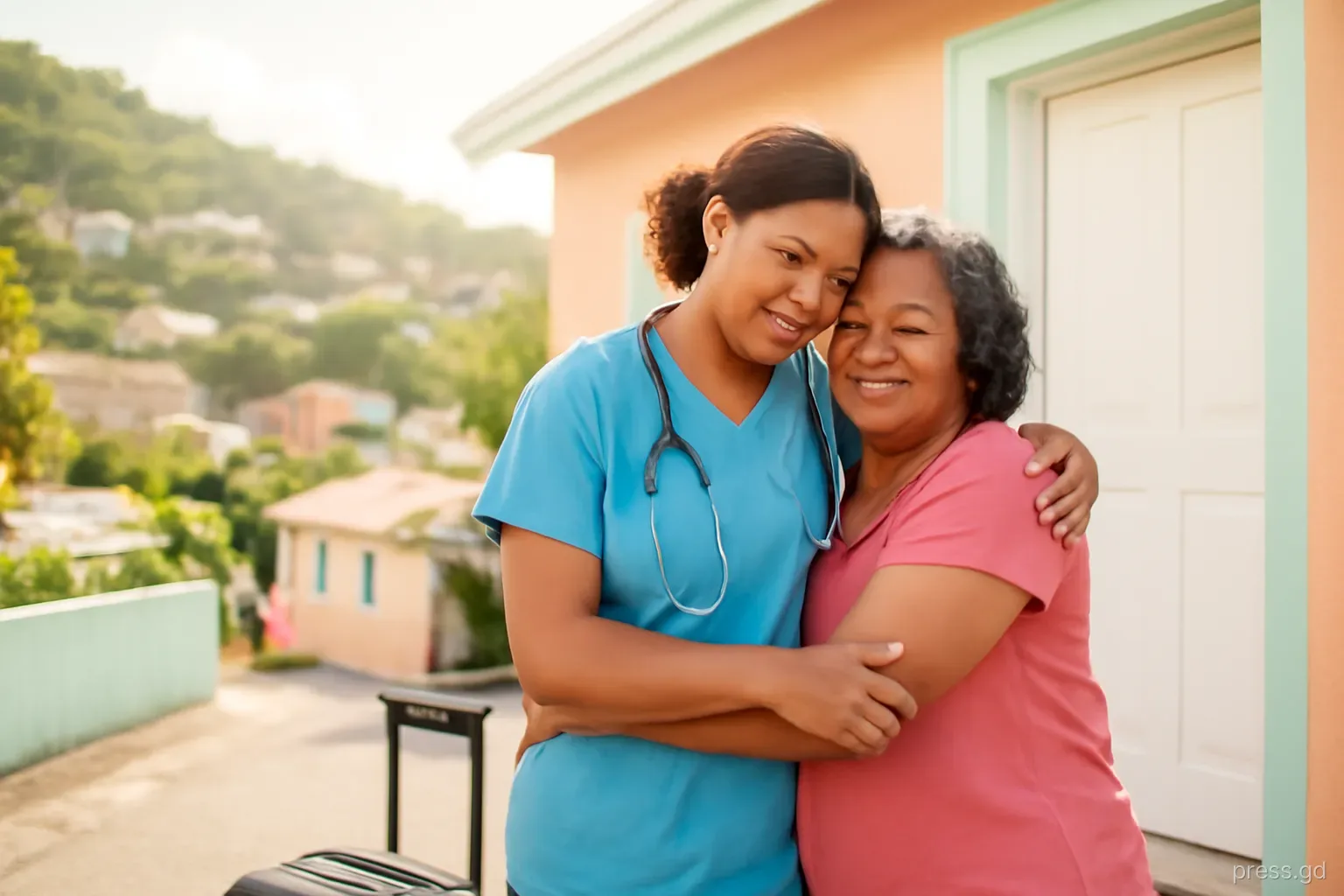
Return migration has long been part of Grenadian life, and governments actively encourage it. Common reasons for returning include:
- Retirement: many emigrants plan to build or renovate a home on family land and return when they stop working, bringing pensions earned abroad.
- Family obligations: caring for ageing parents, managing family land or raising children in a familiar environment.
- Quality of life: climate, community, food and a slower pace compared with large northern cities.
- Business opportunities: returnees invest savings in guesthouses, farms, shops, transport and services, sometimes bringing new skills.
- Government concessions: returning nationals may qualify for duty concessions on personal effects, household goods and a vehicle, subject to conditions set by the relevant authorities.
- Disillusion abroad: high living costs, harsh winters, racism or the difficulties of immigration status can also prompt a return.
Tensions and what policy can do
Returnees sometimes face a cool reception. Locals may see them as having missed hard times, as wealthy, or as impatient with local ways of doing things. Returnees, in turn, may be frustrated by bureaucracy, slower services or changed communities. Both sides adjust over time, and many returnees play leading roles in churches, community groups and business.
Policy responses to migration range from retention measures, such as better pay and conditions for nurses and teachers, bonding arrangements for publicly funded training and professional development, to engagement with the diaspora through outreach, investment promotion and recognition of overseas associations.
Within the region, CARICOM free movement arrangements allow certain categories of skilled nationals to live and work in other member states, adding another layer to Grenadian mobility. Migration will remain a central feature of Grenadian society; the policy question is less how to stop it than how to make it work better for the people who leave, the families who stay and the country as a whole.
Mistakes in how migration is discussed
Treating it as a recent crisis. Leaving for work has been part of Grenadian life for well over a century; current debates are the latest chapter, not a sudden break.
Counting only the losses. Remittances, return investment, skills gained abroad and diaspora networks also flow back, and they should be weighed alongside departures.
Blaming individuals. A nurse who takes a better-paid post abroad responds to the same incentives as workers anywhere. Policy, pay and conditions explain more than personal loyalty.
Quoting unverified numbers. Estimates of the diaspora and of remittance flows vary widely between sources. Figures should be traced to central bank, census or international data before they are repeated.
Forgetting internal movement. Migration also happens within the country, from rural parishes and the sister islands toward St George's and the south, which reshapes villages as much as emigration does.
Frequently asked questions
How many Grenadians live abroad?
Estimates suggest the number of people of Grenadian birth or descent living overseas is comparable to the population at home, but precise figures are difficult because of different counting methods in receiving countries. The largest communities are in the United States, Canada, the United Kingdom and Trinidad and Tobago.
Why do so many Grenadian nurses emigrate?
Higher salaries, better working conditions and active recruitment by hospitals in North America and the United Kingdom draw experienced nurses abroad. Caribbean governments have raised concerns about the impact on small health systems that pay to train them.
What are remittances and why do they matter?
Remittances are money sent home by people working abroad. In Grenada they support household spending on education, health, food and housing, help families recover after disasters and bring foreign exchange into the economy.
Is the brain drain getting worse?
It fluctuates with conditions abroad and at home. Recruitment drives by wealthy countries can cause sharp losses in specific professions such as nursing, while economic growth or better conditions at home can slow departures. Reliable trend data is limited.
Do returning Grenadians get any benefits?
Returning nationals may qualify for customs concessions on personal and household effects and a vehicle, subject to residency conditions and approval. Requirements change, so check with the government office responsible for diaspora affairs and the Customs and Excise Division.
Does migration help or hurt Grenada overall?
Both. It drains skills and separates families, but it also brings remittances, investment and returning expertise. Economists and policymakers debate the balance, which varies by profession and period.