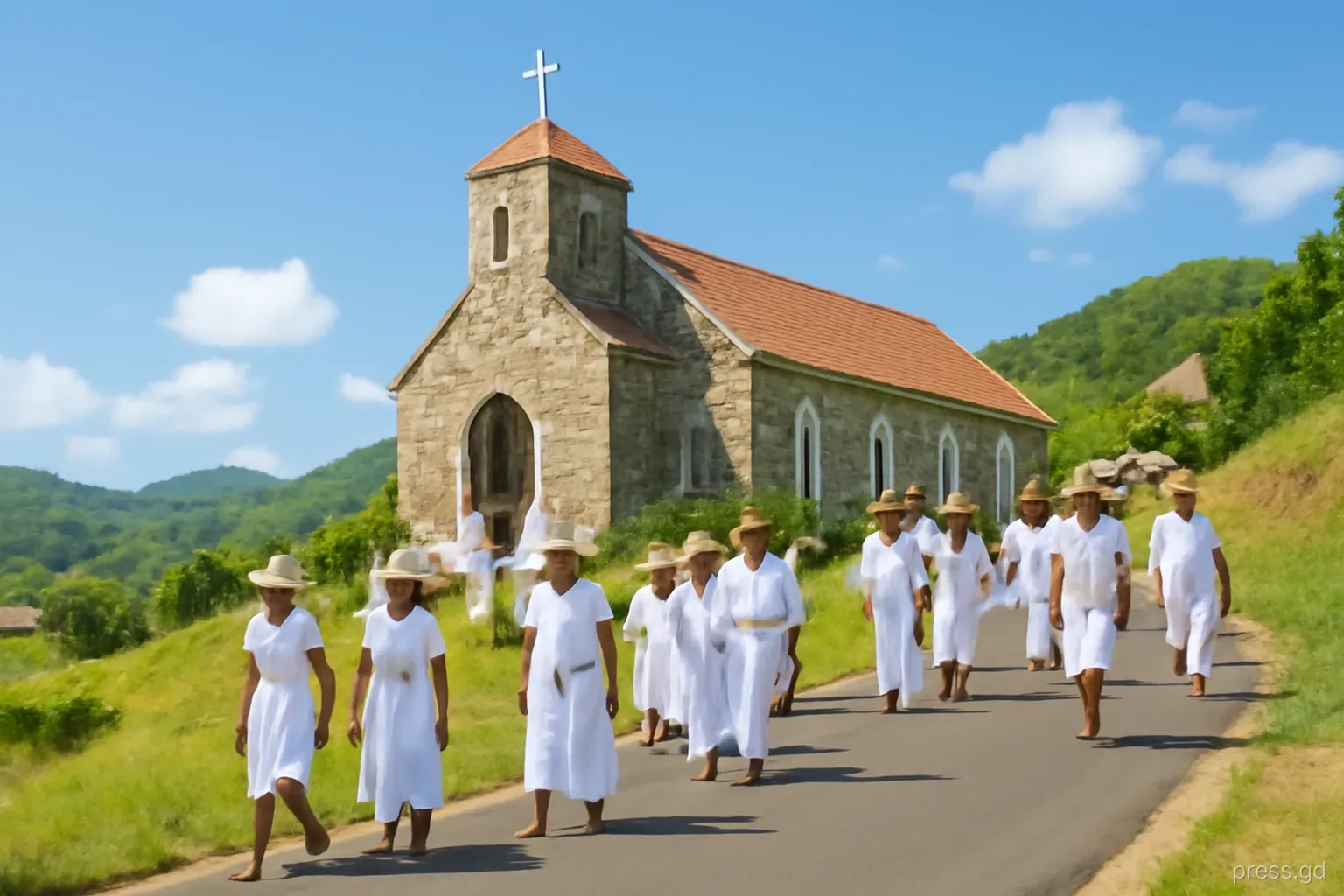
On a Sunday morning in almost any Grenadian village, the roads fill with people in their best clothes walking to church, and the sound of hymns carries from open windows. Religion is woven into public life in ways visitors notice quickly: prayers open official functions, many schools are run by churches, and religious holidays such as Corpus Christi are public holidays. Yet the religious map of the country has changed considerably over the past half-century.
The Roman Catholic Church, the largest denomination since the French colonial era, has seen its share decline, while Pentecostal, evangelical and Seventh-day Adventist churches have grown. Older Protestant churches such as the Anglicans and Methodists have also lost ground in relative terms. This explainer traces how that happened, what the available figures can and cannot tell us, and why churches still matter in schools, welfare and politics.
A colonial inheritance in two languages
Grenada's religious foundations reflect its colonial history. Under French rule in the seventeenth and eighteenth centuries, Catholicism was the established faith, brought by settlers and imposed on enslaved Africans. When Britain took control in the 1760s, and permanently after 1783, the Anglican Church became the official church, and the British authorities restricted Catholic rights for a time, a tension that ran through the island's politics in that era.
Despite British rule, much of the population remained Catholic, partly because of French-speaking communities, and partly because Catholic missionary orders were active in education and parish life. Methodist and Presbyterian missions arrived in the nineteenth century, and the Methodists in particular became associated with education and with the newly free population after emancipation in 1834 and full freedom in 1838.
The result was a society where Catholics formed the largest group and Anglicans the second, with smaller Methodist and Presbyterian communities. That pattern shaped the school system, the calendar and the public face of religion well into the twentieth century.
What the numbers show, with caveats
Census data on religion is the best guide, but it comes with limits. According to the 2001 census, the last for which detailed religious figures have been widely cited, Roman Catholics made up roughly 44 per cent of the population, Anglicans about 12 per cent, and Pentecostals and Seventh-day Adventists about 11 per cent each. Other estimates published around 2011 suggest the Catholic share had fallen further and Pentecostal and Adventist shares had risen, though those figures are estimates rather than official census counts.
The direction of change is clearer than the exact numbers. Across the English-speaking Caribbean, older established churches have declined as a share of the population, while Pentecostal and evangelical churches have grown rapidly since the 1970s. Grenada follows that regional pattern.
Figures should also be read carefully because people's affiliations are fluid. Someone may be baptised Catholic, attend a Pentecostal service with friends, and send their child to an Anglican school. A census captures what people report on a given day, not the full complexity of practice. The Central Statistical Office is the authoritative source for the latest census data.
The churches and faiths on the map today
Roman Catholic Church. Still the largest single denomination, with the Diocese of St George's, parishes across the islands, and a large network of schools including well-known secondary schools in St George's.
Anglican Church. Part of the Church in the Province of the West Indies, with historic parish churches in every parish and a significant role in education.
Methodist and Presbyterian churches. Smaller but historic, with churches and schools in St George's and the parishes; the Presbyterian church in the capital is one of its landmark buildings.
Pentecostal and evangelical churches. The fastest-growing group, ranging from large congregations with modern buildings to small village churches meeting in houses or halls.
Seventh-day Adventist Church. Strongly established, with its own schools and health emphasis. Its Saturday Sabbath means members avoid work and some activities from Friday sunset to Saturday sunset.
Spiritual Baptists. A Caribbean faith blending Christian and African elements, known for practices such as mourning and distinctive worship. Like the Shouter Baptists of Trinidad, it faced official suspicion in the colonial era.
Rastafari, Islam, Hinduism and others. Rastafari has a visible presence, especially among younger people and artists. Small Muslim, Hindu, Baha'i and other communities also exist, including among students and residents linked to St. George's University.
Why Pentecostal and evangelical churches grew
Several explanations are offered for the shift, and they are not mutually exclusive. Pentecostal and evangelical churches tend to offer participatory, emotionally expressive worship, with music, testimony and lay leadership that many people find more engaging than formal liturgy. Leadership is often local and accessible; a pastor may be a neighbour rather than a priest posted from elsewhere.
Social change also played a part. Migration to and from North America and the United Kingdom exposed Grenadians to evangelical movements abroad, and returning nationals and missionary links helped plant new congregations. American religious broadcasting and, more recently, online services spread the style further.
The political upheavals of the late 1970s and early 1980s are sometimes mentioned as a factor in religious change, but this is debated and difficult to measure. What is clear is that by the 2000s Pentecostal churches had become a major force, with influence on public debates about morality, education and law.
Churches in schools, welfare and politics
The most important institutional role of churches is in education. Grenada's school system includes many denominational schools, owned by churches but largely funded by government, which pays teachers and follows the national curriculum. Catholic, Anglican, Methodist, Presbyterian and Adventist schools sit alongside government schools at primary and secondary levels. Admission is generally not restricted to members of the church, though the school's religious ethos shapes assemblies and values.
Churches also run or support welfare work: feeding programmes, homes for the elderly, counselling and disaster relief. After hurricanes, church networks are among the first to organise help, drawing on links with congregations abroad.
In politics, religious leaders are consulted and often speak out on national issues, from crime and family life to constitutional questions. Bodies such as the Conference of Churches bring several denominations together. Grenada's constitution guarantees freedom of religion, and there is no established state church today, but religious values remain a strong influence on public debate.
Practical things newcomers should know
For people moving to or working in Grenada, a few customs are worth knowing:
- Public holidays include Good Friday, Easter Monday, Whit Monday, Corpus Christi and Christmas, so offices close on dates that may be unfamiliar to visitors from more secular countries.
- Sunday remains a quiet day in many communities, with shops closed and church, family lunch and visiting taking priority.
- Adventists observe the Sabbath from Friday sunset to Saturday sunset, which affects scheduling for meetings, events and some businesses.
- Dress is generally modest and smart for church services, funerals and formal events; visitors attending a service should follow local norms.
- Funerals are significant community events, often large, with wakes beforehand. Attending as a colleague or neighbour is considered a mark of respect.
- Religious language is common in everyday speech and public life, and politeness about faith is expected even among people who are not observant.
Religion, festivals and everyday culture
Religious practice in Grenada overlaps with festivals and folk traditions in ways that are not always obvious to outsiders. Carnival, now Spicemas in August, has historical links to the pre-Lenten season of the Catholic calendar, even though it has long since moved dates and taken on a life of its own. Fishermen's Birthday in Gouyave, held around the feast of Saints Peter and Paul at the end of June, combines a church blessing of boats and nets with a street festival.
Funeral customs show the same blending. Wakes, nine nights and memorial gatherings often mix Christian prayer and hymns with older traditions of food, storytelling and music. On Carriacou, practices such as saraka and the Big Drum carry African ancestral elements alongside church observance.
Some churches, particularly stricter Pentecostal congregations, discourage members from joining carnival or certain traditional practices, which creates debate within families and communities about where faith ends and culture begins.
Frequently asked questions
What is the main religion in Grenada?
Christianity is the main religion. The Roman Catholic Church is the largest single denomination, followed historically by the Anglican Church, with Pentecostal, Seventh-day Adventist, Methodist and other churches all significant. Smaller communities of other faiths also live on the islands.
Is there freedom of religion in Grenada?
Yes. The constitution protects freedom of conscience and religion, including the right to change religion and to practise it publicly. There is no established state church today, although churches play a large role in education and public life.
Are church schools in Grenada only for members of that church?
Generally no. Denominational schools are largely government-funded and follow the national curriculum. They usually admit students of any background, though the school's religious character shapes assemblies, values and some activities.
Why is Corpus Christi a public holiday in Grenada?
It reflects the long influence of the Roman Catholic Church, dating back to French colonial times. Corpus Christi falls on a Thursday about two months after Easter and is marked by processions and services in many parishes.
Who are the Spiritual Baptists?
They are a Caribbean Christian movement combining Protestant worship with African-derived practices, including spiritual journeys known as mourning. The faith faced official suspicion in colonial times and is now recognised as one of Grenada's religious communities.
Where can recent figures on religion in Grenada be found?
The Central Statistical Office publishes census results, including questions on religion. Older census figures from 2001 are widely quoted, and later estimates exist, but readers should check the most recent official census tables for accurate shares.