In the early hours of 13 March 1979, armed members of the New Jewel Movement took the True Blue army barracks and the government radio station while Prime Minister Eric Gairy was in New York. By the end of the day the Gairy government had collapsed with very little bloodshed, and Maurice Bishop announced over the radio that a People's Revolutionary Government had taken power. It was the first unconstitutional change of government in the English-speaking Caribbean.
The PRG governed Grenada for four and a half years, until its own internal crisis in October 1983. This explainer is about how it actually governed: the laws it used, the institutions it built, its relations with the outside world, and the record that its supporters and critics still argue over. The events of October 1983 and their aftermath are treated in a separate article.
Governing by People's Law
The new government suspended the 1973 Constitution and ruled through decrees known as People's Laws, issued by the PRG. Parliament did not sit. The Governor-General, Sir Paul Scoon, remained in office and Grenada stayed within the Commonwealth with the Queen as head of state, a notable choice that gave the regime a thread of legal continuity and reassured some neighbours. The courts continued to operate, though the PRG created new arrangements for cases it considered political.
Real power lay with the leadership of the New Jewel Movement, organised along Marxist-Leninist lines with a Central Committee and a Political Bureau. Bishop was Prime Minister, and Bernard Coard, an economist and Bishop's long-standing colleague, served as Minister of Finance and later Deputy Prime Minister. The party was small and selective in membership, which became important later, because decisions taken inside it were not exposed to public debate.
Early on, the PRG promised elections, but none were held. Its leaders argued that parliamentary elections under the Westminster model were less democratic than the direct participation they were building through mass organisations and councils. Critics saw that as a justification for staying in power without a vote.
The institutions the PRG built
Mass organisations. The National Women's Organisation, the National Youth Organisation, the Pioneers for children and farmer and worker groups were set up or expanded to involve large numbers of people in government programmes and political education.
Parish and zonal councils. Meetings at parish and village level allowed residents to question ministers and officials and discuss local problems. Workers' councils operated in some workplaces. Supporters point to them as genuine participation; critics note that they had no binding power and were dominated by the party.
The People's Revolutionary Army and militia. A new army replaced Gairy's security forces, alongside a large volunteer militia. The armed forces grew far larger than Grenada had ever had, a point neighbouring governments watched closely.
Economic institutions. The PRG described its approach as a mixed economy with a leading state sector. It created bodies such as the Marketing and National Importing Board, expanded state agro-industries and set up a state commercial bank, while private business continued to operate.
Social programmes and the airport
The PRG placed heavy emphasis on social programmes. The Centre for Popular Education ran an adult literacy campaign from 1980. Secondary school fees were cut, scholarships for study abroad, many of them in Cuba and Eastern Europe, increased, and free milk and health programmes were expanded. A national insurance scheme was established in 1983. Supporters regard these as lasting achievements; independent assessments of their scale and effect vary.
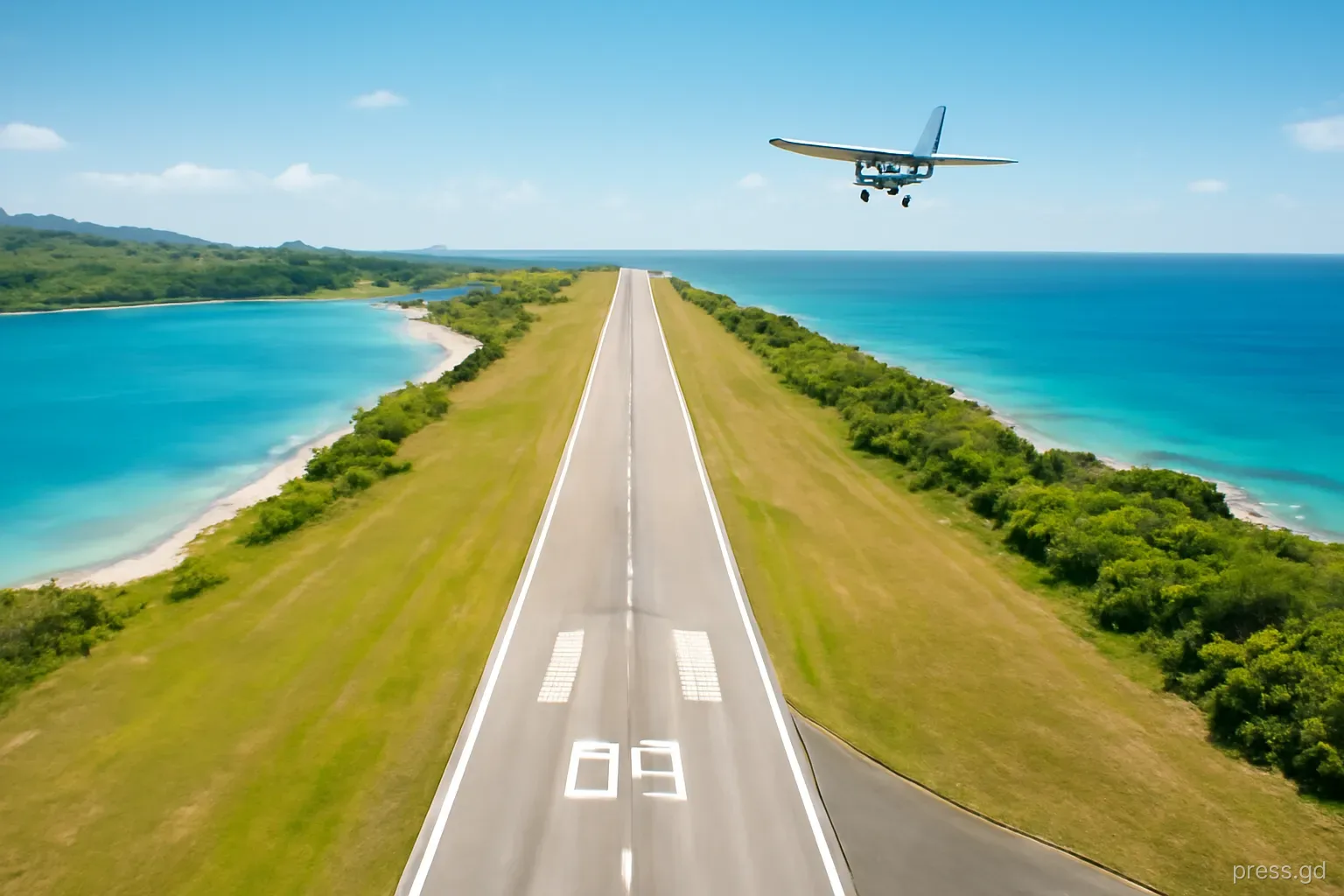
The most visible project was a new international airport at Point Salines in the south-west, replacing the small Pearls airport on the east coast, which could not take large jets and was a long drive from the tourist areas. Cuba supplied construction workers and much of the equipment, and financing came from several countries. The US government argued the long runway could serve Soviet and Cuban military purposes; the PRG insisted it was for tourism. Plans for a new airport had existed before 1979, and the airport was completed after 1983, opening in 1984.
Rights, detention and the press
The PRG's record on civil liberties is the area most criticised. Political opponents, including former Gairy officials and some who had supported the revolution and later fell out with it, were held in detention without trial, many at Richmond Hill prison, some for years. Human rights groups raised concerns at the time. The government argued it faced genuine threats of counter-revolution and foreign-backed destabilisation, pointing to incidents such as the June 1980 bomb explosion at a rally in Queen's Park, which killed and injured people in the crowd.
Independent media were closed. The long-established Torchlight newspaper was shut in 1979, and in 1981 an attempt by a group of citizens to launch an independent paper, The Grenadian Voice, ended with the paper closed and some of its backers detained. Radio and the remaining press were under state control. For a generation of Grenadian journalists and politicians, this experience shaped later attitudes to press freedom.
Grenada in the Cold War
The PRG aligned itself with Cuba, the Soviet Union and the non-aligned movement, while maintaining relations with Western European and Caribbean governments. Bishop became a well-known figure on the international left, and Grenada received aid and technical assistance from a range of countries. Relations with the United States deteriorated sharply after 1981, as the Reagan administration treated Grenada as part of a Soviet and Cuban threat in the region and limited access to some multilateral finance.
Within the Caribbean, governments were divided. Some kept cordial relations; others, particularly in the Eastern Caribbean and Barbados, grew increasingly alarmed by the absence of elections, the detentions and the size of the army. Those concerns would shape their response in October 1983.
Reading the period today requires care with sources. A large archive of PRG and NJM internal records was taken by US forces in 1983 and later published in part; it is valuable but was selected and presented in a Cold War context. Memoirs by former participants on all sides are also partisan, and the most reliable accounts compare several kinds of evidence.
Common misconceptions about the PRG
"It was a Cuban takeover." The 1979 seizure of power was carried out by Grenadians in the NJM. Cuba became the closest foreign partner afterwards, supplying advisers, doctors, teachers and airport workers, but the government was Grenadian.
"Grenada left the Commonwealth." It did not. The Queen remained head of state and the Governor-General stayed in post throughout the period, a fact that became important in October 1983.
"Nothing worked under the PRG." The period produced projects that outlasted it, including the airport and the national insurance scheme. Economic data from the time are disputed, and assessments depend heavily on the source.
"Everyone supported the revolution." Support was broad in 1979, especially among young people, but it was never universal. The Catholic and Anglican churches, businesspeople and many older Grenadians had reservations that grew as detentions and press closures continued.
"The PRG fell because of the intervention." The government had already collapsed in a split inside the NJM leadership before 25 October 1983. Bishop had been placed under house arrest by his own party's Central Committee, and he was killed six days before foreign forces arrived.
Key dates of the PRG years
The four and a half years moved quickly. These dates anchor most accounts of the period:
- 13 March 1979: the NJM takes power; the People's Revolutionary Government is announced.
- 1979: the 1973 Constitution is suspended and People's Laws issued; the Torchlight newspaper is closed.
- 1980: the Centre for Popular Education launches its adult literacy campaign; in June a bomb explodes at a rally in Queen's Park.
- 1981: the independent Grenadian Voice is closed after its first issue; relations with the United States worsen.
- 1983: the national insurance scheme is created; Bishop visits the United States in June in an attempt to ease tensions.
- September and October 1983: a proposal for joint leadership between Bishop and Coard divides the party; Bishop is placed under house arrest on 13 October and killed on 19 October.
Frequently asked questions
How did the People's Revolutionary Government come to power?
The New Jewel Movement seized power on 13 March 1979 by taking the True Blue army barracks and the radio station while Prime Minister Eric Gairy was abroad. The takeover was swift and involved little loss of life. Maurice Bishop then announced the new government on the radio.
Did the PRG hold elections?
No. The PRG suspended the constitution and governed by People's Laws. It initially spoke of elections but argued that participation through mass organisations and councils was more democratic. No national election took place between 1976 and December 1984.
Who built the Point Salines airport?
Construction began under the PRG, with Cuban workers and equipment and financing from several countries. After the events of 1983, the work was completed with other assistance, and the airport opened in 1984. It was renamed Maurice Bishop International Airport in 2009.
What were the People's Laws?
People's Laws were the decrees through which the PRG governed after suspending the 1973 Constitution. They covered matters from the structure of government and detention powers to economic and social measures, taking the place of acts of Parliament.
Why was the PRG criticised?
Critics point to the suspension of the constitution, the lack of elections, detention of opponents without trial, closure of independent newspapers and close ties with Cuba and the Soviet Union. Supporters emphasise its social programmes, mass participation and the airport project.