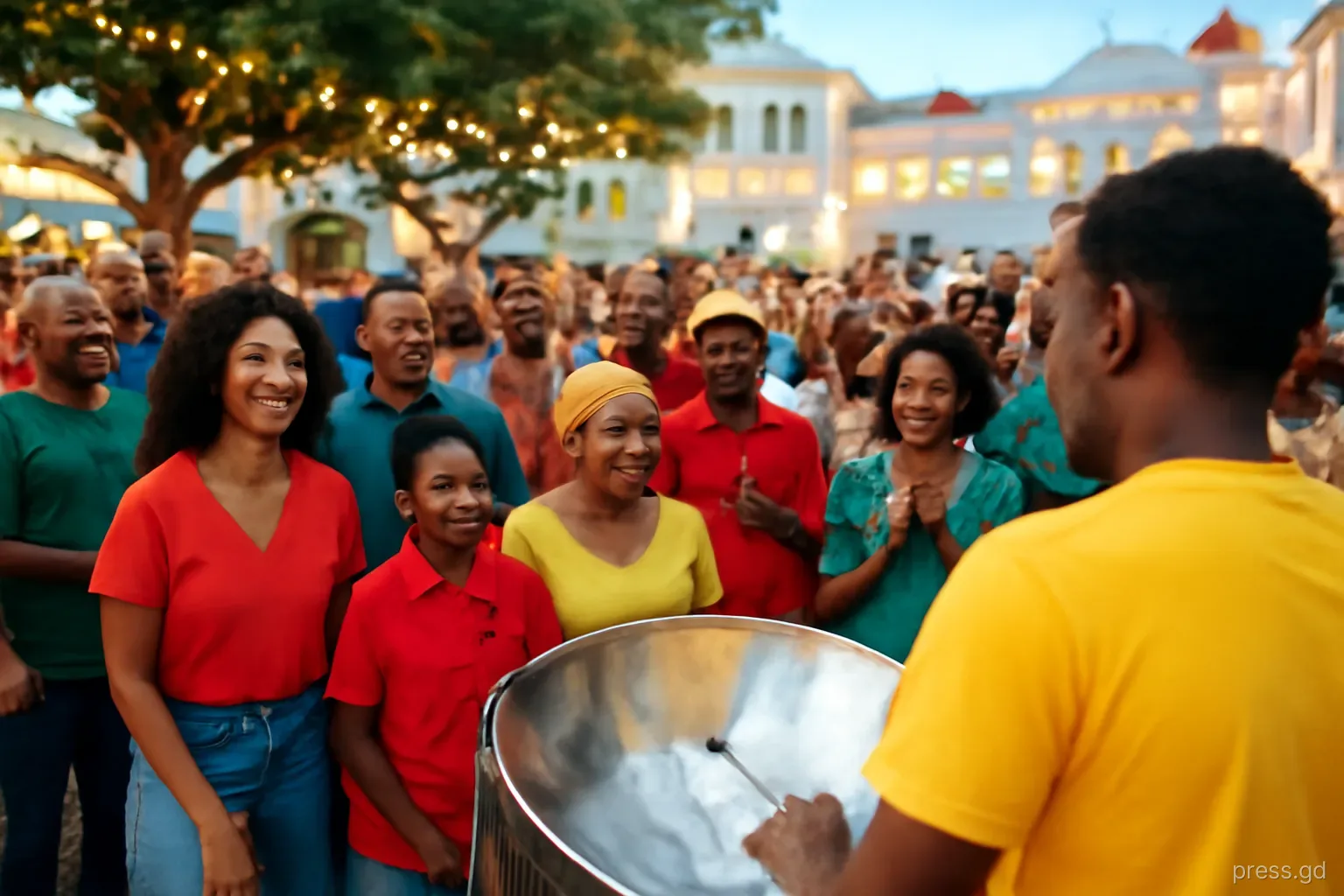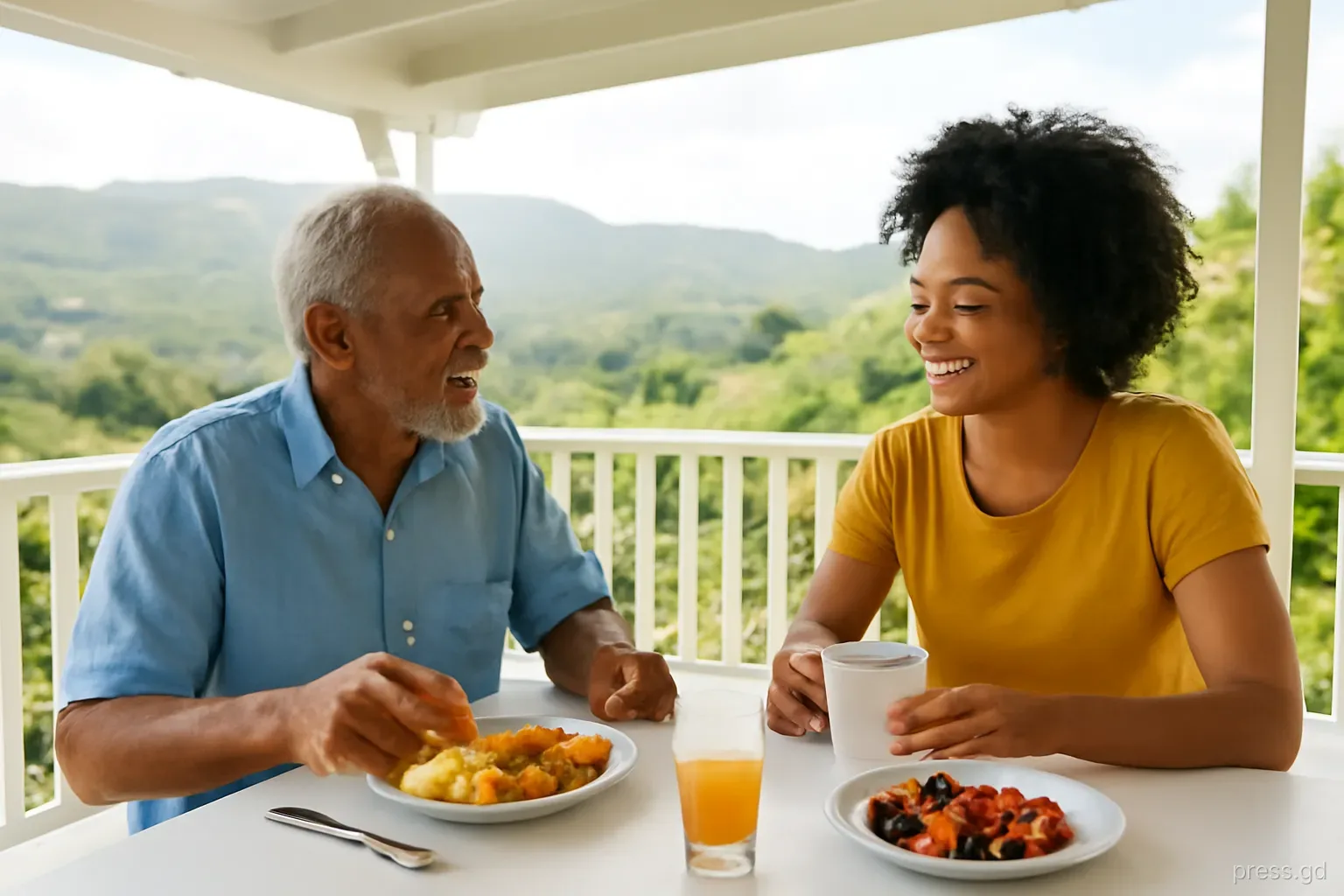
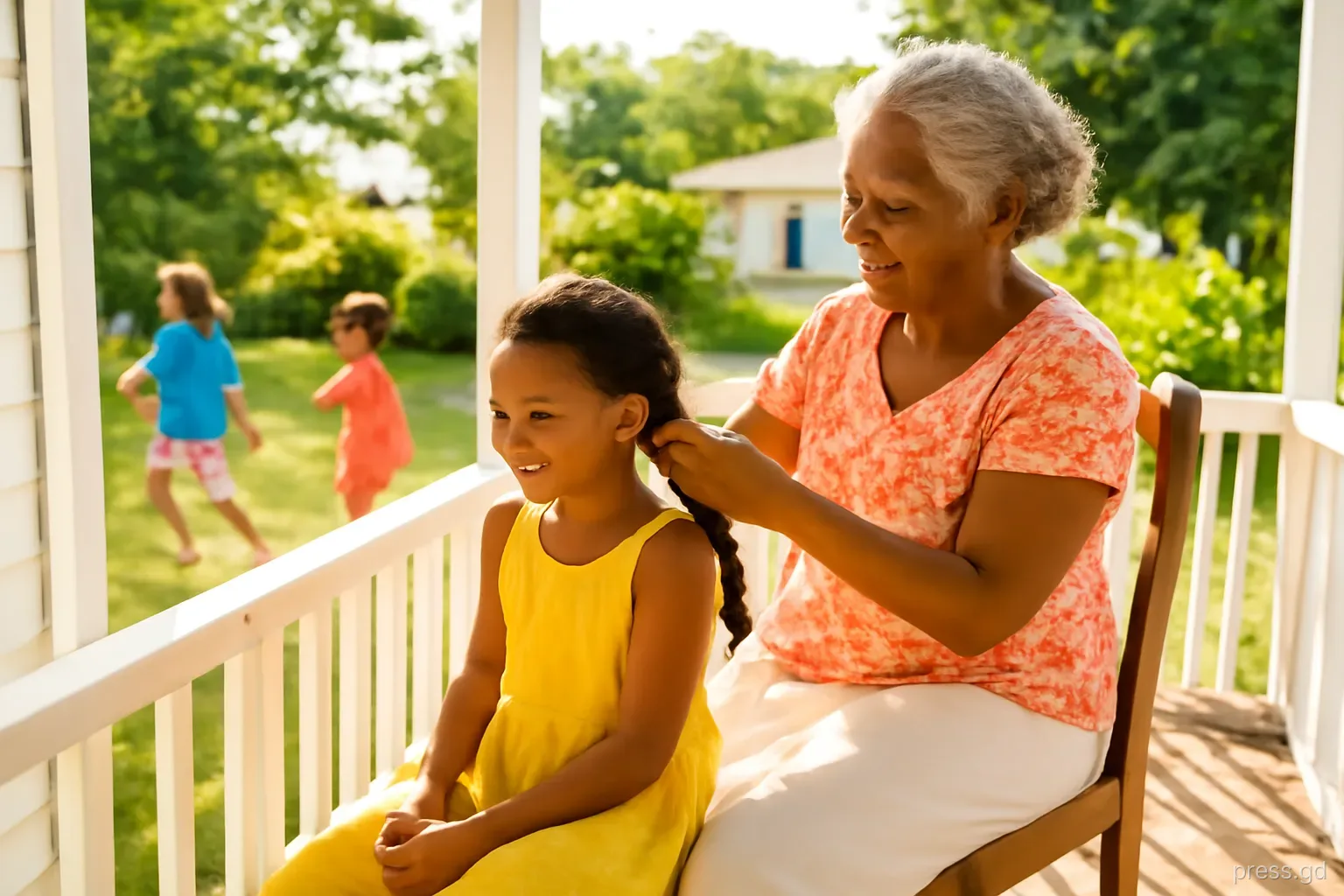
In Grenada, the question “who is your family?” rarely has a short answer. A child may be raised mainly by a grandmother, have a father living in another parish and a mother working in New York, and spend weekends with aunts and cousins. A household may include three generations and a family friend who has lived there for years. Family is less a fixed unit than a network that stretches across yards, villages and countries.
Social scientists have studied Caribbean family patterns for decades, often contrasting them with the European model of a married couple and their children. Those comparisons can be misleading. This explainer describes how Grenadian families are commonly organised, where those patterns come from, how law treats them, and the changes, from migration to falling birth rates, that are reshaping family life.
Several household types, all ordinary
Grenadian households take many forms, and none of them is unusual. There are married couples with children, as in many societies. There are common-law unions, where couples live together without marrying, sometimes for decades. There are visiting unions, in which partners have children together but live in separate homes, with the man visiting and contributing support. And there are households headed by women, often mothers or grandmothers, which are common across the Caribbean.
Many households are extended: grandparents, adult children, grandchildren, nieces and nephews living together or in adjoining houses on the same family land. This pattern is particularly visible in rural parishes, where a family yard may contain several houses built over generations by siblings and their children.
People often move between these forms over a lifetime. A couple may begin in a visiting relationship, live together after a few years and marry later, sometimes once their children are grown. Marriage carries social prestige and is associated with church life and financial stability, which helps explain why it often comes later rather than earlier.
Where the patterns come from
Researchers trace Caribbean family patterns to several historical forces. Under slavery, enslaved people were denied legal marriage, families could be separated by sale, and kinship networks formed beyond the nuclear family as a means of survival. After emancipation, economic insecurity, seasonal work and migration continued to separate partners and parents from children.
Migration has been a constant theme. Grenadians have travelled for work for well over a century: to Trinidad, Aruba and other parts of the Caribbean, to Britain after the Second World War, and to the United States and Canada in later decades. Each wave left children with grandparents or relatives, reinforcing the role of the extended family in raising the next generation.
Cultural values matter too. Respect for elders, the importance of the mother and grandmother, and the idea that children belong to a wider family rather than only to their biological parents are deeply rooted. These values are not simply a response to hardship; they are a strength that has allowed families to absorb shocks, from hurricanes to emigration.
The central role of grandparents
Everyday care. Grandmothers in particular often take on daily care of grandchildren while parents work long hours, live in another parish or have migrated. In many families, the grandmother's house is the centre of family life.
Transmission of culture. Grandparents pass on cooking, faith, folklore, language expressions and knowledge of family land and history.
Financial pivot. Remittances sent by emigrant children often go to the grandparent caring for their children, making the older generation a manager of family finances.
Pressure on older carers. Raising children in later life can strain health and income, especially for grandparents with only a small pension. This is an emerging concern as the population ages.
Reverse care. As grandparents grow frail, the same networks are expected to care for them, which becomes harder when many younger relatives live abroad.
Children left behind by migration
The term “barrel children” is used across the Caribbean for children whose parents work abroad and send barrels of clothes, food and goods home, along with money. For many families, migration is a rational strategy: a parent earns far more in New York, Toronto or London and can pay for school fees, uniforms, a house and medical care that would otherwise be out of reach.
The costs are emotional as well as financial. Children may spend years apart from a parent, and relationships can become strained even when material needs are met. Teachers and counsellors sometimes observe behavioural or emotional difficulties in children separated from parents, while others thrive in the care of grandparents and extended family. Outcomes vary widely and depend on the quality of care, communication and the duration of separation.
Smartphones and video calls have changed the experience, allowing parents to stay involved in daily life in ways impossible a generation ago. Reunification, when children join parents abroad as teenagers, brings its own challenges of adjustment to a new country and school system.
What the law says about family
Grenadian law has gradually moved to protect children regardless of their parents' marital status. Legislation has removed many of the old distinctions between children born inside and outside marriage, especially in matters of maintenance and inheritance, though specific rules depend on the statute and the circumstances, and legal advice is needed for particular cases.
Child maintenance can be sought through the courts when a parent does not support a child. Disputes over custody and access are handled by the courts, with the child's welfare as the guiding principle. The Child Protection and Adoption Act of 2010 created the Child Protection Authority as the main agency for child protection, with responsibility for foster care, adoption and responding to reports of abuse. It also introduced mandatory reporting of suspected abuse by certain professionals.
Common-law partners generally have fewer automatic rights than married spouses in matters such as property and inheritance, which can create serious difficulties when a long-term partner dies without a will. Making a will and clarifying property arrangements are practical steps advised by lawyers for couples in long-term unions.
Changes reshaping family life
Several trends are altering the picture, some gradually and some quickly:
- Smaller families. Birth rates have fallen, as across the Caribbean, so families are smaller than in previous generations and fewer siblings share care for ageing parents.
- An ageing population. More older people and fewer young adults, partly because of emigration, put pressure on family care networks.
- Education and women's work. Women's educational attainment and participation in paid work have risen, changing household roles and decisions about marriage and children.
- Housing pressures. Rising land and construction costs make it harder for young couples to build on family land or buy homes, keeping adult children at home longer.
- Digital connection. Video calls and messaging keep dispersed families in contact and influence how authority and care are shared across borders.
- Disaster displacement. After Hurricane Beryl, some families from Carriacou and Petite Martinique moved temporarily or permanently, scattering networks that had been close-knit.
Common misreadings of Caribbean family life
That women-headed households mean absent fathers. Many fathers in visiting unions or living elsewhere remain involved and contribute support. The household label hides a wide range of real relationships.
That marriage is unimportant. Marriage remains highly valued; it is often delayed until a couple feels financially secure, rather than rejected.
That extended families are a sign of poverty. Shared households and family yards are also about care, inheritance and cultural values, and they appear across income levels.
That migration breaks families. It strains them, but many families sustain strong bonds across borders for decades through visits, remittances and daily calls.
That the pattern is uniquely Grenadian. Similar household forms exist across the Caribbean and in many other societies with histories of migration; Grenada shares a regional story rather than standing apart from it.
Frequently asked questions
Is it common for grandparents to raise children in Grenada?
Yes. Grandparents, especially grandmothers, often provide daily care while parents work or live abroad. This is a long-standing Caribbean pattern linked to migration and extended family values, and it is widely accepted rather than seen as unusual.
What is a visiting union?
It is a relationship in which partners have a committed relationship and often children together but live in separate homes. The partner, often the father, visits regularly and is expected to contribute support. Such unions may later become cohabiting or married relationships.
Do children born outside marriage have equal rights in Grenada?
Grenadian law has removed many distinctions between children born inside and outside marriage, particularly for maintenance and inheritance. Specific rights depend on the law and circumstances, so consult a lawyer for questions about a particular case.
Who handles child abuse reports in Grenada?
The Child Protection Authority, created under the Child Protection and Adoption Act of 2010, is the main agency. Certain professionals have a duty to report suspected abuse. In an emergency, call the police on 911.
What are barrel children?
The term describes children whose parents work abroad and send money and barrels of goods home, while the children are raised by grandparents or other relatives. It highlights both the material benefits and the emotional costs of family separation through migration.
Do common-law partners inherit if there is no will?
Common-law partners usually have fewer automatic inheritance rights than married spouses, and outcomes depend on the law and court decisions. Couples in long-term unions are strongly advised to make wills and document property arrangements.