
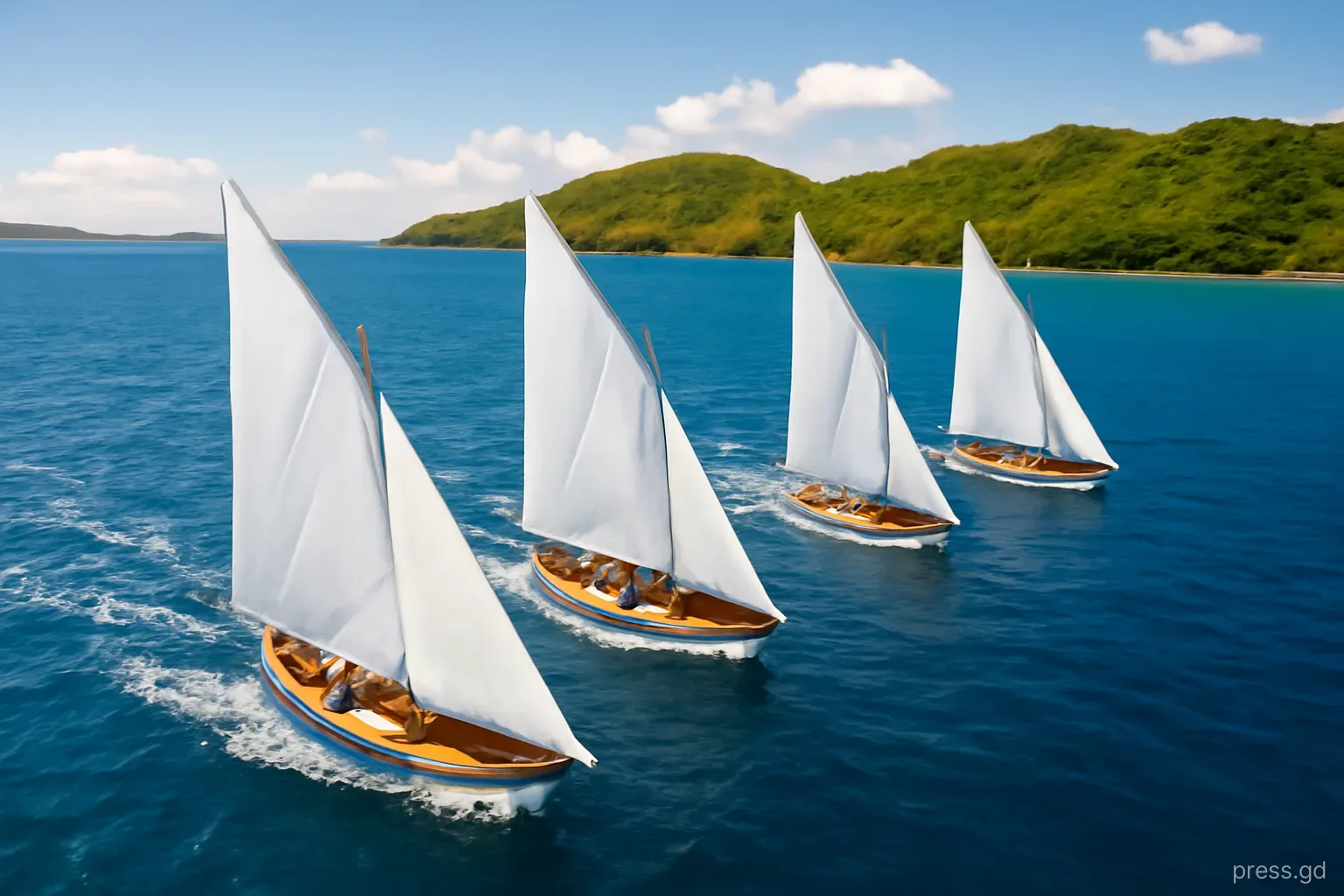
Every year around the start of August, Carriacou fills up. Boats arrive from Grenada, Petite Martinique and neighbouring islands, guesthouses in Hillsborough run out of rooms, and the bay becomes a racecourse for wooden sloops built on the island's own beaches. The Carriacou Regatta, which began in 1965, is one of the oldest continuously celebrated sailing festivals in the eastern Caribbean.
It is also unusual. Many Caribbean regattas centre on modern yachts and visiting crews. Carriacou's is built around local workboats and the people who build and sail them, with land events from donkey races to the greasy pole running alongside. This article explains how the regatta started, why boatbuilding matters so much to the island, and what anyone planning to attend should know.
How it started
The regatta was started in 1965 by J. Linton Rigg, an American yachtsman who had settled in the area and saw the potential of a competition for the working boats of Carriacou and nearby islands. Those boats were not built for sport. They carried cargo, livestock and passengers between islands, and fished the surrounding waters. Racing them was a way of celebrating the skill of their builders and crews.
Rigg also commissioned a 40-foot sloop, the Mermaid of Carriacou, which became the boat to beat for more than a decade. The prestige of winning drew boatbuilders into friendly but intense rivalry, and the event grew from a race into a festival.
The regatta soon became fixed in the island calendar around early August, a period that includes Emancipation Day on 1 August and the August Monday holiday. That timing brings back Carriacouans living on mainland Grenada and abroad, turning the regatta into a homecoming as much as a sporting event.
Boatbuilding in Windward
To understand the regatta, it helps to know about Windward, the village on Carriacou's north-east coast long associated with boatbuilding. Builders there have constructed wooden sloops on the beach for generations, using techniques that accounts often link to Scottish shipwrights who settled on the island in the colonial period. The craft has been passed down within families, with skills learnt by watching and working alongside older builders rather than from plans.
Traditional boats are built by eye, with a keel laid on the sand and ribs shaped from local timber. A launch is a community occasion, often with blessings, food and music, and a boat that does well at the regatta brings honour to its builder and village.
The craft faces pressures familiar to traditional industries everywhere: the cost and availability of suitable timber, competition from fibreglass boats and outboard engines, and younger people moving away for work. The regatta is one of the main reasons the skills remain visible and valued, and builders and cultural organisations have pushed for the craft to be recorded and taught so that it survives beyond the current generation of master builders.
What happens on the water
Classes by size. Races are organised into classes, broadly by boat type and length, covering open boats and larger decked sloops, from about 12 feet up to around 40 feet.
The big boats. The decked sloops are the stars, and the race around the island is one of the most watched events of the weekend.
Local crews. Boats are sailed by crews from Carriacou, Petite Martinique, Grenada and neighbouring islands, and rivalries between villages and islands are fierce.
Watching from shore. Hillsborough and the beaches around the bay give good views of starts and finishes, and some spectators follow races from small boats.
Visiting yachts. Cruising sailors often time their passage to be in Carriacou for the regatta, anchoring in Hillsborough or Tyrrel Bay.
What happens on land
The regatta has always been more than a sailing competition. Land events traditionally include donkey races, the greasy pole, bicycle races and assorted competitions that draw big, noisy crowds. Evenings bring music, food stalls and parties around Hillsborough, and local cuisine, from fish and lambi to traditional dishes associated with Carriacou's heritage, is everywhere.
The atmosphere is that of a community festival. Families reunite, people come back from overseas, and the island's distinct culture is on show, including its strong traditions of music and dance. Visitors expecting a slick, organised event may be surprised; the charm lies partly in its informality.
For Grenadians on the mainland, the regatta is one of the main reasons to make the trip across to Carriacou, either on the ferry from St George's or by air. It sits in the same summer stretch as Spicemas, Grenada's carnival, which is held in August on the main island, so the whole month has a festive rhythm.
The regatta within Grenada's wider sailing life
The Carriacou Regatta is the best-known expression of a seafaring culture that runs through the whole state of Grenada. Fishing communities on the main island, from Gouyave and Grenville to the south coast, depend on small open boats, and many islanders grow up handling them long before they ever race. Petite Martinique, a short distance from Carriacou, has its own strong maritime traditions, and its sailors are among the most respected competitors at the regatta.
On mainland Grenada, the yachting scene centres on the south coast marinas and anchorages around Prickly Bay, True Blue, Port Louis in St George's and Woburn, where visiting yachts and local sailors take part in regattas and races during the year, including Grenada Sailing Week, which has traditionally been held early in the year. Youth sailing programmes introduce children to dinghy sailing, and some have gone on to regional competition.
The contrast is telling. The south coast scene is largely about modern yachts and international visitors. Carriacou's regatta remains rooted in local boats, local builders and local crews, which is exactly why many Grenadians regard it as the more authentic expression of the islands' relationship with the sea.
Planning a regatta trip: what to sort out first
The regatta is the busiest time of the year on Carriacou, so preparation matters. Arrangements and services change, and the island is still rebuilding from Hurricane Beryl, which caused severe damage in July 2024, so confirm current details before you travel.
- Confirm the dates with the regatta organisers or the Grenada Tourism Authority. The festival is usually around the first weekend of August, but the exact schedule varies by year.
- Book accommodation early. Guesthouses, small hotels and apartments fill up quickly, and some properties damaged by Hurricane Beryl may have reduced capacity or still be closed.
- Plan transport from Grenada. Check ferry schedules and air links, and book ahead where possible, as demand rises sharply around the regatta weekend.
- Bring cash in EC dollars. Card payments are less widely accepted on Carriacou than on the main island, and banking machines can run short during busy periods.
- Prepare for sun and heat. Spectating from shore means long hours outdoors, so bring hats, water and sun protection.
Common mistakes visitors make
First-time visitors sometimes arrive with assumptions that do not match the event:
- Expecting a yacht regatta. The heart of Carriacou's regatta is traditional local boats, not modern racing yachts.
- Assuming events run to a strict timetable. Starts can shift with wind, weather and local organisation, so be flexible.
- Leaving accommodation and transport to the last minute. The island is small and capacity is limited.
- Ignoring the post-Beryl situation. Recovery has been uneven, and some services may still be limited; check before you go.
- Treating it as a spectacle only. The regatta is a community event, and respecting local customs, crews and builders matters.
- Photographing people and boats without asking. Most crews are happy to be photographed, but asking first is polite, particularly at launches and blessings.
- Forgetting that the sea can be rough. Spectating from a small boat during races can be uncomfortable and risky for anyone without experience, so go with an experienced local skipper.
Frequently asked questions
When is the Carriacou Regatta held?
It is usually held around the first weekend of August, close to Emancipation Day and the August Monday holiday. Exact dates vary each year, so confirm the schedule with organisers or the Grenada Tourism Authority before travelling.
When did the Carriacou Regatta begin?
It began in 1965, started by J. Linton Rigg as a race for local workboats. It has since grown into a festival with races in several classes and a range of land-based events.
What kind of boats race at the regatta?
Mostly traditional wooden workboats and sloops, many built on Carriacou, particularly in the village of Windward. Boats range from small open craft to decked sloops of around 40 feet.
Are there events for people who do not sail?
Yes. Land events have traditionally included donkey races, the greasy pole and bicycle races, along with evening music, food stalls and parties around Hillsborough, so the festival offers plenty for spectators who never set foot on a boat.
Has Hurricane Beryl affected the regatta?
Hurricane Beryl caused severe damage on Carriacou in July 2024. Recovery has been uneven, and some accommodation and services may be limited, so check the latest arrangements before planning a trip.